Have you heard of using Yoga Nidra for sleep, or “Sleep Yoga?” Also called Yogic Sleep, or NSDR (Non Sleep Deep Relaxation.)
People use Yoga Nidra primarily for deep relaxation, stress reduction, and improving sleep quality, often complementing their meditation or wellness practices. It can also help enhance self-awareness and promote emotional well-being.
Yoga Nidra for sleep really is pure magic, did you know that one 30-minute session can equal about 4 hours of sleep? Sounds crazy, but it’s true.
Yoga Nidra can also be used to go to sleep quicker and easier, stay asleep longer, and improve mental health.
Find out how to get better sleep with Yoga Nidra below. (Plus lots of other benefits!)
Yoga Nidra is not your typical “yoga.” There is no movement or really any exertion involved. Yoga Nidra is typically performed lying comfortably on your back in Savasana Pose.
All you need is someone to guide you through a Yoga Nidra Script. Your guide will take you through a class that can last anywhere from 10 minutes to an hour.
During the entire class, you will be lying on your back and the goal is to actually not fall asleep but to stay in an aware state of ultimate relaxation. During Yoga Nidra, you may find yourself in limbo an awake and sleep state.
History Of Yoga Nidra For Sleep
Yoga Nidra’s origins can be traced back thousands of years, and it has evolved over time to become the deeply relaxing and therapeutic practice known today.
The Buddhists said that Yoga Nidra is a state in which Buddhas may access hidden knowledge. Cool!
The concept of Yoga Nidra is deeply rooted in traditional yogic texts and practices. Elements of Yoga Nidra can be found in ancient scriptures like the Upanishads and the Mahabharata, where yogis explored states of deep meditation and conscious relaxation.
Yoga Nidra, as it is practiced today, owes much to the modern yogi Swami Satyananda Saraswati. In the mid-20th century, Swami Satyananda adapted and popularized the practice, making it accessible to a broader audience. He founded the Bihar School of Yoga and introduced Yoga Nidra as a systematic method for relaxation, meditation, and self-inquiry.
There is also influence from the Tantric tradition, which emerged around the 6th century CE and played a significant role in the development of Yoga Nidra. Tantric practitioners sought to harness and transform various energies within the body and mind, and Yoga Nidra became a method for achieving these states of awareness.
Yoga Nidra was mentioned without context in the ancient Hindu text Mahabharata. We are not sure what or how “yoga nidra” was practiced in the past.
[The Ocean] becomes the bed of the lotus-naveled Vishnu when at the termination of every Yuga that deity of immeasurable power enjoys yoga-nidra, the deep sleep under the spell of spiritual meditation.
In recent years, Yoga Nidra has gained popularity outside of traditional yoga circles. It is now widely practiced for its stress reduction, sleep improvement, and general well-being benefits. Online platforms and mobile apps offer guided sessions, making it accessible to people worldwide.
Who Teaches Yoga Nidra Classes?
When seeking instruction in Yoga Nidra, it’s advisable to choose a qualified and experienced teacher who can guide you effectively through the practice and ensure a safe and beneficial experience.
Yoga Nidra can be taught by various individuals, including:
Certified Yoga Instructors: Many certified yoga instructors offer Yoga Nidra as part of their classes or workshops, either in person or online. They may specialize in different yoga traditions or styles, such as Hatha, Kundalini, or Yoga Nidra itself.
Meditation and Mindfulness Instructors: Some meditation and mindfulness teachers incorporate Yoga Nidra into their practices to promote relaxation and inner awareness.
Psychologists and Therapists: Mental health professionals sometimes use Yoga Nidra as a therapeutic tool to help clients manage stress, anxiety, and trauma.
Online Platforms and Apps: Numerous online platforms and mobile apps offer guided Yoga Nidra sessions led by experienced instructors, making it accessible to a wide audience.
Self-Guided Practice: Once individuals become familiar with the technique, they can also practice Yoga Nidra on their own using recorded scripts or written instructions.
Benefits of Yoga Nidra For Sleep
Yoga Nidra has many benefits beyond just improving sleep. The benefits are similar to those of a regular meditation practice.
To experience the full benefits of Yoga Nidra for sleep, it’s important to practice it regularly, ideally as part of a bedtime routine. Over time, you may find that it not only improves your sleep but also enhances your overall quality of life by reducing stress and promoting relaxation.
How Does Yoga Nidra For Sleep Work?
Yoga Nidra works by taking the mind and body through a trip down into a semi-state of sleep. Through this journey, the brain passes through the same brain waves that we experience when we are sleeping.
That’s why Yoga Nidra is so powerful, it gives us the same physical and chemical rest as sleep in a short period of time.
Yoga Nidra can be almost as restorative as a few hours of real sleep due to the transition of brain waves. But keep in mind Yoga Nidra is made for relaxation and improving sleep, not outright replacing it.
Some people claim that 30 minutes to one hour of yoga nidra can be as restorative as 4 hours of real sleep.
Yoga Nidra really is quite simple, all you have to do is lie down in a comfortable position and listen to the instructions from your guide.
Is Yoga Nidra As Powerful As Real Sleep?
Yoga Nidra is a powerful practice for relaxation, stress reduction, and improving sleep quality, but it is not a replacement for real sleep. While Yoga Nidra can have profound effects on the mind and body, it doesn’t provide the same physiological and cognitive benefits as actual sleep.
Here’s how Yoga Nidra compares to real sleep:
Restorative Sleep
Real sleep is essential for the body to undergo various restorative processes, such as tissue repair, muscle growth, immune system support, and memory consolidation. Yoga Nidra, while deeply relaxing, does not fulfill these functions to the same extent as sleep.
Physical Restoration
During deep sleep, the body experiences changes in hormone production, temperature regulation, and blood pressure. These processes are crucial for maintaining overall health, and Yoga Nidra does not replicate them.
Cognitive Benefits
Sleep plays a vital role in memory consolidation, problem-solving, and creativity. While Yoga Nidra can enhance focus and mental clarity, it doesn’t provide the same cognitive benefits as a full night’s sleep.
Energy Restoration
Sleep replenishes energy levels, allowing you to wake up feeling refreshed and rejuvenated. Yoga Nidra can reduce fatigue and promote relaxation, but it doesn’t replace the need for sleep when it comes to sustaining energy throughout the day.
Emotional Balance
Both sleep and Yoga Nidra can help regulate emotions and reduce stress, but they do so through different mechanisms. Sleep has a more comprehensive impact on emotional well-being, helping to stabilize mood and manage emotional challenges.
While Yoga Nidra can be a valuable tool for managing stress, promoting relaxation, and improving sleep quality, it cannot replace the need for sufficient, restorative sleep.
Brain Waves In Yoga Nidra
Yoga Nidra works on multiple levels, including physical relaxation, mental relaxation, and emotional balance. It engages the parasympathetic nervous system, which is responsible for the “rest and digest” response, helping to counteract the stress response that can interfere with sleep.
Studies show that during a yoga nidra practice, advanced practitioners consciously enter non-REM sleep, exhibiting delta waves on an EEG.
However, most novice practitioners should expect to enter the theta and alpha waves, which is a state of deep relaxation.
Each brain wave frequency is responsible for various activities in our lives. See this list below to find out what each wave is responsible for.
Gamma Waves – 25 – 100 Hz – This is the faster brain wave that is responsible for quick actions and thinking.
Beta Waves – 12 – 30 Hz – This is the frequency at which we normally think and solve problems.
Alpha Waves 8 – 12 Hz – In this frequency, we are generally relaxed and calm.
Theta Waves 3 – 8 Hz – Associated with sleep and very deep meditation.
Delta .5 – 3 Hz – These slowest brain waves happen when we are in very deep sleep.
Yoga Nidra for sleep really is quite simple, all you have to do is lie down in a comfortable position and listen to the instructions from your guide.
Since you will be in Savasana pose, you can do yoga nidra lying in your bed just before going to sleep. You can also add a yoga bolster or pillow underneath the knees.
Here’s how a Yoga Nidra session typically goes:
Preparation
Find a quiet and comfortable place where you won’t be disturbed. Wherever you are, you want to let your body be completely comfortable so there are no physical distractions.
Intention Setting
The practice begins with setting a specific intention or Sankalpa, which is a positive statement or affirmation that you wish to manifest in your life. This intention should be something related to sleep or relaxation, such as “I will sleep peacefully tonight.”
Body Scan
The Yoga Nidra guide (either a live instructor or a recording) will lead you through a systematic body scan. This involves mentally focusing on different parts of your body and consciously relaxing them. This process helps release physical tension and prepares the body for deep relaxation.
Breath Awareness
You’ll be guided to pay attention to your breath. Focusing on your breath helps calm the mind and anchor your awareness in the present moment.
Visualization
During the practice, you may be led through a series of guided visualizations. This could involve imagining peaceful scenes or scenarios that promote relaxation. Visualization can help divert your mind from racing thoughts and worries, which can interfere with sleep.
Awareness of Sensations
You’ll be encouraged to become aware of any sensations or feelings that arise in your body, such as warmth, heaviness, or tingling. This heightened awareness helps deepen the state of relaxation.
Mantras and Affirmations
The instructor may introduce mantras or affirmations at various points in the practice to reinforce positive beliefs or intentions related to sleep.
Deep Relaxation
As the practice continues, you’ll gradually enter a state of deep relaxation, similar to the border between wakefulness and sleep. At this point, your body is completely relaxed, and your mind is calm and receptive.
Sankalpa Reminder
Toward the end of the session, you’ll revisit your initial intention (Sankalpa). This reinforces the positive message in your subconscious mind.
Completion
The practice typically concludes with a gradual return to a state of wakefulness. You may be guided to wiggle your fingers and toes or gently bring your awareness back to the present moment.
Consistent practice of Yoga Nidra for sleep can train your body and mind to enter this state of deep relaxation more readily, making it easier to fall asleep and experience restorative sleep. It can also help break the cycle of insomnia and improve your overall sleep quality.
Best Yoga Nidra For Sleep Podcasts
There are plenty of free podcasts out there to help you get started with Yoga Nidra.
These podcasts below are available on Spotify, but you can also search on Apple Podcasts, Stitcher, or wherever you listen to podcasts.
Best Yoga Nidra For Sleep On YouTube
Have you tried Yoga Nidra? Does it help you sleep? Tell us about it below.
As a yoga teacher, sometimes it’s hard to keep your classes fresh and exciting. You might find yourself looking for ways to stay inspired and keep your students engaged.
That’s where theme ideas for yoga classes can really give you the creative boost you need to keep teaching new and exciting classes.
You’ll find everything you need and more to create awesome theme ideas for your yoga classes that will keep your students coming back for more!
A theme class is when there’s a general idea inspiring the overall flow of the class. You might have gone to a fall or spring-themed class or even a Thanksgiving or Christmas-themed class.
The teacher will usually keep this “theme” running throughout the entire class and may mention the theme a few times throughout the session.
Themes can be based on a time of year, a celestial event like a full moon, in honor of a feeling like love, or inspired by nature. There are really endless theme ideas for yoga classes.
Themed classes are unique because they offer a different and fun experience for the yoga student, as well as a chance for the yoga instructor to find new inspiration for their teaching style.
If you are a yoga teacher and are feeling stale about the classes you teach, you should utilize a class theme to bring some creativity back into your class’s flow.
Types Of Yoga Class Theme
There are many different ways to come up with a theme for your class. To make it simple, here’s a list of categories for theme classes.
Physical Theme– Like twist, inversions, balancing, etc.
Feeling or Word Theme– Love or union, strength, power.
Celestial – Full moon, planets in retrograde.
Weather – Rain, sunshine, seasons, etc.
Temporal – Morning, evening, afternoon.
Event or Holiday – Easter (abundance,) New Years’.
Intention – Let go, surrender, acceptance, or forgiveness.
Chakra – Theme a class based on each, or all the chakras.
Nature – Draw inspiration from anything in nature!
Animal – Create a fun, primal flow based on an animal.
Fantasy – Make a really unique class inspired by a mystical creature.
Finding Inspiration For A Yoga Class Theme
Yoga is such a beautiful language and through that language, we can understand ourselves and the world around us better. With that said, finding inspiration for your yoga class theme is as easy as exploring and examining the world around you.
I believe NATURE is one of the best inspirations for your themed yoga class.
Connecting with nature is something everyone is craving more and more these days. Themeing a class after “wind,” “rain,” “water,” or “lightning,” can be very meaningful for your students as it tickles the imagination and brings up memories of their own experiences connected to this theme.
You might also find inspiration for themed classes in your everyday life. Turbulence in relationships can conjure themes like “forgiveness,” and “truth.”
Emotions like “happiness,” “joy,” “elation,” and “patience,” are also great themes.
Even listening to the news might conjure theme ideas like “women’s power,” “world peace,” “understanding,” and “mother nature.”
How To Make A Theme Into A Yoga Flow
Taking some of the examples above, how do you make “women’s power,” or “patience,” into an actionable, real yoga class?
The best way to turn these ambiguous words into actual yoga poses and classes is to break down the meaning of the word and how it relates to yoga and the physical body.
For example, “women’s power” could be translated into poses like Yogi Squat (Malasana) which was a pose traditionally used to give birth, Goddess Pose, Mermaid Pose, and any other pose that has to do with opening the hips.
The theme “patience” could be put into use by perhaps slowing down the class, holding poses longer than usual, and making people become comfortable with the unknown.
It might also be helpful if you include an anecdote about your personal experience with patience or self-love, this will make the theme less abstract and more relatable to your students.
Each theme or word might seem intimidating at first. But if you break it down into how that word makes you feel, what it immediately brings to mind, and how it might relate to the human body in yoga, you’ll be well on your way to creating amazingly unique themed yoga classes that your students can’t get enough of.
Break the theme down into how that word makes you feel, what it immediately brings to mind, and how it might relate to the human body in yoga, then you’ll be well on your way to creating amazingly unique themed yoga classes that your students can’t get enough of.
101 Ideas For Yoga Classes
Check out this inspirational list below to help you create a theme for your next yoga class! Feel free to find inspiration in your own life as well.
Physical Themes
Twists – Incorporate plenty of twists throughout the entire class, a really great theme for cleansing the body.
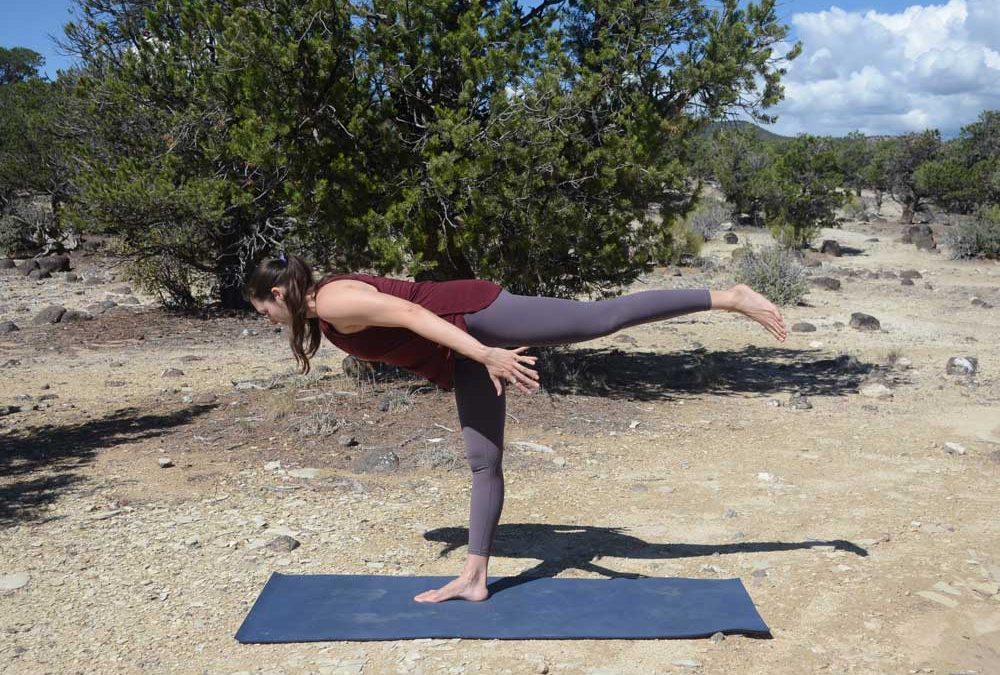
Balancing – Focus on balancing poses like Tree Pose, Half Moon Pose, Warrior 3, and Dancer’s Pose.
Hips – Utilize poses like Lizard Pose, Pigeon Pose, Malasana, and Low Lunge.
Inversions – Add headstands and handstands to make this a fun upside-down class.
Advanced – If you have advanced students, bring them into difficult poses like Peacock, Crow, Scorpion, and Eight-Angle Pose.
Flying – Many of the balancing poses will also fit into this theme like Warrior 3, Lightning Bolt Pose, and Bird Dog.
Upper Body Strength – Bring your students into poses that challenge the upper arms, like Yogi Pushups, Dolphin Pose, and Side Plank.
Lower Body Strength – Use poses like Goddess Pose, Yogi Squats, and the Warrior Poses to bring heat to the lower body.
Core Strength – Side bends, Plank variations and Boat Pose would be great additions to a class focused on the core.
Back Strength – Forward Folds and plenty of moves in Superman Pose will strengthen the back.
Feelings & Emotions
Love – Use the concept of love or self-love and reiterate that concept throughout the class.
Union – Using physical poses like binds and twists to represent “coming together.”
Strength/ Power – Create a fiery flow incorporating all the muscle groups to embody strength.
Surrender – Slow down the class and pause in difficult and uncomfortable poses to embody surrendering.
Forgiveness – Use this idea throughout class in a way students can forgive either their body or someone in their life.
Gratitude – Reminders of gratitude throughout class will reinforce this sentiment, like “Be grateful for your legs holding you strongly atop the earth.”
Peace – Remind your students to be at peace throughout the class.
Happiness – Remind your students to smile repeatedly throughout the class and maybe encourage laughter.
Celestial Yoga Theme Class
Moon Phases – Let the moon phase inspire your class; Full – abundance and clarity, half – optimism, or new moon – clean slate and mystery. Each phase represents a different meaning.
Special Full Moons like Blood Moon etc – Bring awareness to why this full moon is special and the symbology behind it. Feel free to add all the moon-named poses like Half Moon Pose and Crescent Pose.
Lunar Eclipse – These can be mysterious celestial events happening in the middle of the night, bringing about mystery and the occult.
Solar Eclipse – A solar eclipse only lasts a few minutes, perhaps invite your students to hold a pose for as long as a solar eclipse lasts.
Solstices – The summer solstice is the longest day of the year while the winter solstice is the shortest, translate these into long or short holds.
Equinoxes – These events reveal equal length in days and nights, so focus on balance and equality in our bodies.
Planets in Retrograde – Sometimes this can cause turbulence, invite your students to reflect on what that means for them and how they can manage to fight any negativity.
Astrological Seasons – Theme a class on the current astrological season.
Weather Events
Rain – Rain represents new growth and washing unwanted things away.
Thunder – Encourage your students to get audible, or stomp the ground together making a noise like thunder.
Lightning – Incorporate quick and fast movements.
Sunshine – Make the class light and fun, perhaps focusing on energy and growth.
Wind – Lead the body in rhythmic movement like the wind perhaps with pauses for calm and then moving into turbulence.
Hurricane – This could be a power class driven by force.
Tornado – Make a spontaneous power class peppered with twists.
Temporal Themes
Morning – Bring energy into this class to start the day.
Evening – A mellow class is great to help students unwind from their busy days.
Afternoon – An afternoon class can either be energetic or chill.
Dusk & Dawn – Play with the duality of darkness and light.
Event or Holiday – Easter (abundance,) New Year’s, (new beginnings and resolutions,) and other holidays can be great inspirations for classes.
Intention Themes
Let Go – Start this class with deep clearing breaths to help your students let go of anything they’re holding onto. Keep the theme running throughout the class.
Acceptance/ Self-Love – Remind students that if a pose can’t be achieved, or if you fall out of a pose, practice acceptance and move on.
I Am Perfect – Invite students to say this phrase out loud, and reiterate it throughout yoga poses.
Be Present – Constantly remind your students to be present by using their breath and not attaching to thoughts.
Chakra-Themed Yoga Class
Root Chakra – Use poses like tree Pose, Mountain Pose, and Malasana to target this chakra.
Sacral Chakra – Triangle Pose, Crescent Pose.
Solar Plexus – Bow Pose, Sphinx Pose.
Heart Chakra – Camel Pose, Full Wheel, or Bridge Pose.
Throat Chakra – Shoulder Stand, chanting mantras.
Third Eye – Inversions and meditation.
Crown Chakra – Headstand and meditation.
All The Chakras – In one class, move through all the chakras starting at the ground and moving up to the crown. Take time to talk about each one and how it relates to the current pose.
Elemental Themes
Water – Make a sumptuous, steady, and flowy yoga class like water.
Fire – Bring up the heart rate to create heat in the body.
Ice – Create rigid poses and hold them longer than usual.
Metal – Iron, metal, and titanium can represent strength and stability.
Namas & Niyamas Themes
These can be interpreted in many different ways, use the Sanskrit word throughout the class and then describe the concept. We can all be reminded to practice each of these ideas below.
Ahimsa: Nonviolence
Satya: Truthfulness
Asteya: Non-stealing
Brahmacharya: Non-excess or celibacy
Aparigraha: Non-possessiveness
Saucha: Purity
Santosha: Contentment
Tapas: Self-discipline
Svadhyaya: Self-study
Ishvara Pranidhana: Surrender
Animal-Themed Yoga Class Ideas
Lion – Roar like a lion and use Lion’s Breath pranayama.
Turtle – Go slow and savor each pose.
Rabbit / Frog – Practice plenty of hopping.
Eagle or other bird – Use flying poses like Warrior III, Superman, and Bird-dog.
Fish – Similar to a water theme, make students focus on creating fluid movements.
Bumble Bee – Conjure images of flowers and flying throughout the class. Try bumble bee breathing.
Nature-Themed Yoga Classes
Mountain – Utilize Mountain Pose and encourage students to be present, strong, and unmovable like a mountain.
Ocean – The ocean is vast, fluid, and unpredictable. Use this to inspire an exciting class.
Space – Space is the new frontier, add imagery of planets, express the importance of gravity, and let students reflect on what’s “in their orbits.”
Earth – Create an earth flow with powerful grounding poses like Downward Facing Dog, Cobra, and Savasana.
Tree – Build a class around tree pose or the idea of a tall, intelligent, and stable tree with deep roots in the ground.
Rose or other flowers – Use the idea of blossoming in a flower-themed class.
Fantasy And Magic Themed Yoga Classes
Magic – Use magic in a class by coaxing people into difficult poses they thought they could not achieve.
Wizard – Everyone can have their own wizard in this class and manifest their own reality.
Dragon – Incorporate heat, fire, and flying themes.
Unicorn – Let everyone express their uniqueness with a freestyle period.
Chimera – Combine several poses in an unorthodox way.
Dinosaur – Let your students roar and stomp and feel the passage of time.
Leprechaun – Great for St. Patrick’s Day. Incorporate imagery of rainbows.
Fairy – Use flying themes and let students manifest their desires as if they had their own personal fairy.
Mermaid – Focus on water and perhaps lead students into a Mermaid Pose.
Werewolf – You can include many of the moon themes but add a fun element of change, the class can become more wild and difficult toward the end (whenever the moon comes out!)
Pheonix – The Pheonix rising is all about change. Incorporate change, fire, and flight into this class.
Even More Ideas For Yoga Theme Classes
There is a neverending spring of inspiration to theme your yoga class. You cancome up with even more themes than the ones listed above, depending on where you live and the people who are attending your class.
For example, if you live in a university town, you can use the mascot of the team as inspiration. Or perhaps you can craft a class based around your town’s seasonal festival or something the town is known for like a fruit, event, or a special export.
If you teach private yoga lessons, you can draw inspiration from the life of your student, and maybe touch on something that’s going on in their life. Other private class topics could include marriage, the birth of a new child, or the success of a new business.
You could theme a class based on an essential oil that everyone is welcome to try at the beginning of class. Or use a poem read at the start to theme the rest of your yoga class.
Just remember that the point of a theme class is to make the class more fun and interesting for your students. A theme adds a whole new dynamic for everyone to enjoy, always keep it positive and fun!
Video Inspiration For Yoga Theme Classes
How do you theme your yoga classes? Have you used any of the topics above? Share in the comments below 🙂
Transcendental Meditation has taken the world by storm and exploded in popularity. The likes of Oprah and other celebrities swear by its effectiveness.
In general, more and more people are interested in meditation thanks to its multitude of physical and mental benefits. There are plenty of scientific studies now published that prove these claims.
Transcendental Mediation, or TM, is just one of the many mediation styles to choose from. Find out what makes TM different and how to use the mantras for Transcendental Meditation.
Transcendental Meditation, also known as TM or “The TM Technique,” is a system of meditation that is practiced all over the world. It was created by Guru Dev and made popular by Maharishi Mahesh Yogi.
It is a special type of meditation in which teachers must become certified instructors through the Maharishi Foundation.
The meditation is based on repeating a mantra silently to yourself anywhere from 15 minutes to an hour. The goal is to use this sound (a mantra) repetitively to finally achieve silence.
People like TM compared to other meditation systems because it’s simple and easy for anyone to learn.
The traditional process is to find a certified TM teacher or TM center near you and set up a session with an instructor. Then that instructor will offer you a “free introductory talk” to find out what your needs are. This can be done in person or virtually.
After discussing your needs, you can decide to take the official TM course. The official TM course can cost upwards of $600. The upside is that after the course, your instructor is available to you for life, for free.
During the course, which encompasses 4 sessions, you will be given your customized mantra that fits your age, personality, and personal meditation goals.
How To Do Transcendental Meditation
Transcendental Meditation is achieved primarily by repeating a silent mantra in your head over and over again until you reach a place where you can release the mantra and find silence.
How To Practice TM
Find a quiet place to meditate and remove any distractions.
Start in a comfortable seated position ideally on the floor. You can use a meditation cushion, a yoga block, or a blanket underneath your sit bones to make your hips more comfortable.
Make sure you’re sitting up nice and tall with relaxed shoulders.
Close your eyes and start to bring your awareness inward.
Start to focus on the breath, breathing in and out through the nose.
Bring the chosen mantra into your awareness and start to slowly and deliberately repeat it silently to yourself.
Continue for 10 to 15 minutes.
Stop repeating the mantra for about 2 to 3 minutes and meditate in silence before you open your eyes and return to your day.
What are the Mantras for Transcendental Meditation?
The mantras for Transcendental Meditation are usually meaningless words. This allows the meditator to focus on the sound and vibration, rather than the meaning of the word.
TM mantras used to be highly classified information, but over time, the list of mantras for Transcendental Meditation has become available. Yet, it is not known how a teacher actually chooses one for you, only a TM teacher can tell you that!
The mantras are categorized by age are as follows:
AGE
MANTRA
0-11
eng
12-13
em
14-15
enga
16-17
ema
18-19
ieng
20-21
iem
22-23
ienga
24-25
iema
26-29
shirim
30-34
shiring
35-39
kirim
40-44
kiring
45-49
hirim
50-54 hiring
hiring
55-54
hiring
55-59
sham
60+
shama
Do You Really Need To Be Given A Mantra By A TM Teacher?
I believe if you want to do TM exclusively and really dive into the system, then yes, you should follow their rules and use a mantra that was specifically given to you by a teacher.
But if you have done meditation before, and are looking for something new, I believe you can use any mantra that you like. For instance, you do not need to use the mantras for Transcendental Meditation at all, chanting the word “love,” or even the name of your child could be an effective mantra for meditation.
It’s all about the repetition and the quality of vibration of the sound you are repeating.
Perhaps it’s true, that it may not be a good idea to use TM mantras without TM guidance, but any other mantra would be a great addition to your meditation practice.
Mantras help us keep thoughts at bay and help clear and focus the mind.
Can I Use My Own Mantras?
Even though someone can teach you a technique or guide you through a meditation, meditation is a very private practice. But ultimately, everything you experience is experienced by you only.
So, yes, you can definitely use your own mantra! You could use something traditional or even come up with your own.
It’s best to keep the mantra short and sweet. Choose only a few words. The more complicated the mantra is the more likely you are to actually focus on the mantra and its meaning rather than ascending into peace.
Here are some ideas for creating your own mantra :
I am perfect
I am love
This moment is all
I am enough
I am home
Today is perfect
I exist now
I am one
I am light
Here and now
I manifest my reality
Other Effective Mantras For Meditation (That Don’t Need To Be Bestowed Upon You!)
Gayatri Mantra
This mantra is one of the most revered in Hinduism, it is taken from the Rig Veda, a sacred text.
The most popular translation is from Deva Premal, it goes as follows.
Om bhur bhuvah svah Tat savitur varenyam Bhargo devasya dhimahi Dhiya yonah prachodayat
Which means:
Through the coming, going, and balance of life The essential nature illuminating existence is the adorable one May all perceive through subtle intellect The brilliance of enlightenment
Mala Meditation
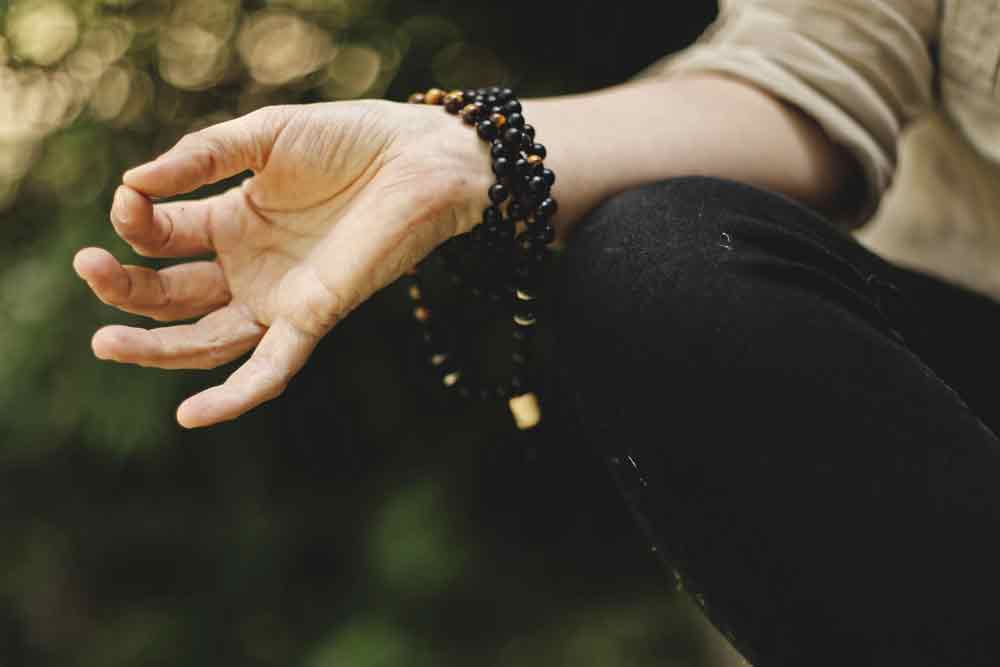
A Mala is a necklace with 108 beads that is used for meditation. The mala is held with one hand, the finger and thumb grasping the beads, stopping at each one to repeat a mantra.
Using a mala for meditation is similar to how a rosary is used in Christianity.
Physically touching the mala and repeating the mantra can be quite effective for people.
The chakras are 7 energy centers that start in our pelvis and continue up our spine through the top of the head. Each chakra represents an idea in our lives, like love, safety, voice, and peace.
Every chakra center has several attributes including color, power, symbology, energy, and sound. You can use the sound of each chakra to bring more energy to that chakra, cleanse the chakra, or try to stimulate a blockage.
One of the most recognized mantras is Om or Aum. It is said to be the sound of the universe and everyone recognizes it for its simple yet great power.
Om is a great mantra because the sound “OM” can be drawn out to really accentuate the vibration.
If you’ve ever chanted OM in a yoga class you may already know the power of this simple mantra and the effective, healing vibration it can create.
Counting Meditation
Another incredibly simple mantra meditation that anyone can do is to simply count. Use can use a slow, even count to bring yourself into a relaxed and stable state.
Start by syncing each breath with a count. Soon enough you may be able to drop the counting and just focus on the breath.
A Few Other Mantras
Here are a few more mantras that come from the Hindu tradition. Many of these are well-known and you may even hear your yoga teacher chant one of these at the end of a yoga class.
Shanti Shanti
So Hum
Om Mani Padme Hum
Om Namah Shivaya
Anandam
What is your experience with using a mantra for meditation? Have you tried any of these listed above? Let us know in the comments!
Are you thinking about starting a yoga practice to help aid your weight loss journey? Well you’ve done your due diligence, yoga is an amazing activity for your health and well-being!
Yoga is an incereibly effective exercise that can help you not only lose weight, but keep it off.
Just like an any exercise, yoga can help you bring up the heart rate and enter the fat burning zone. There are many yoga poses that are great for building muscle and toning the body as well.
Other benefits of yoga include increased mobility, better mental health, and improved flexibility.
There are literally hundreds of yoga poses to choose from. As a beginner, it’s a good idea to stick to simple and foundational yoga poses.
Use these yoga poses below to build a fiery sequence and burn calories.
Each of these poses uses the weight of the body to create resistance. Feel free to add ankle weights or dumbbells for an extra punch.
You can practice each of these poses below in a row for a mini weight loss yoga sequence. Try out these yoga poses for weight loss for beginners below!
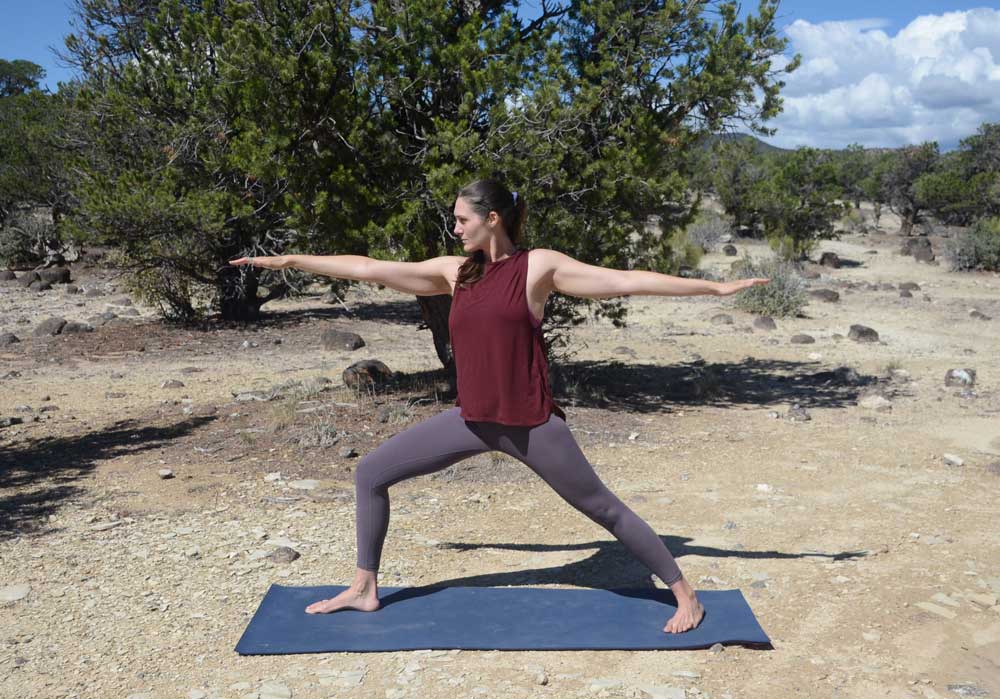
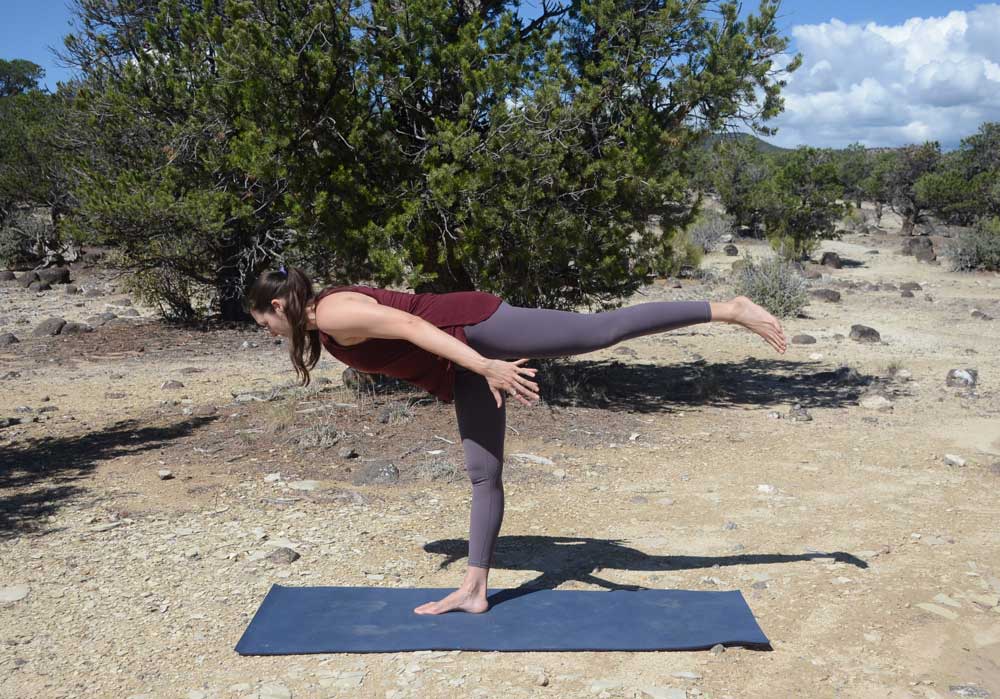
Warrior Pose I, II, & III
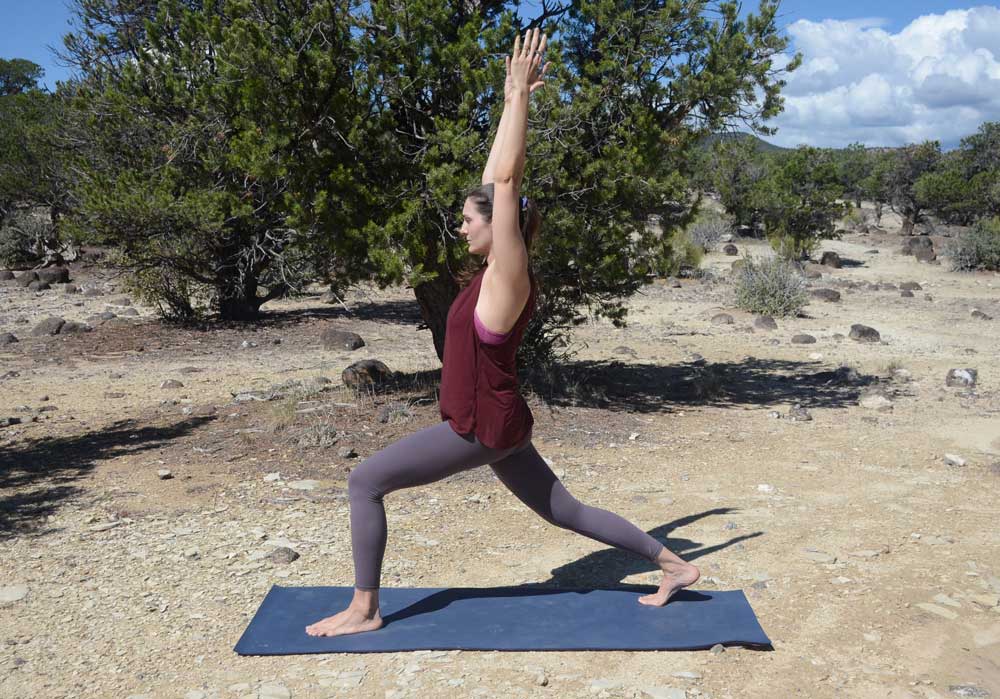
The Warrior Poses are some of the top yoga poses for weight loss and toning because we are using many muscle groups at the same time.
Tips: With Warrior Pose I & II, make sure to keep the knee just above the ankle and the core engaged.
Stay in the pose until you feel a burn in the your thigh muscles, usually 1 to 3 minutes.
You can do a few reps of bending and straightening the front knee for an extra burn in the quads.
Warrior IWarrior IIWarrior III
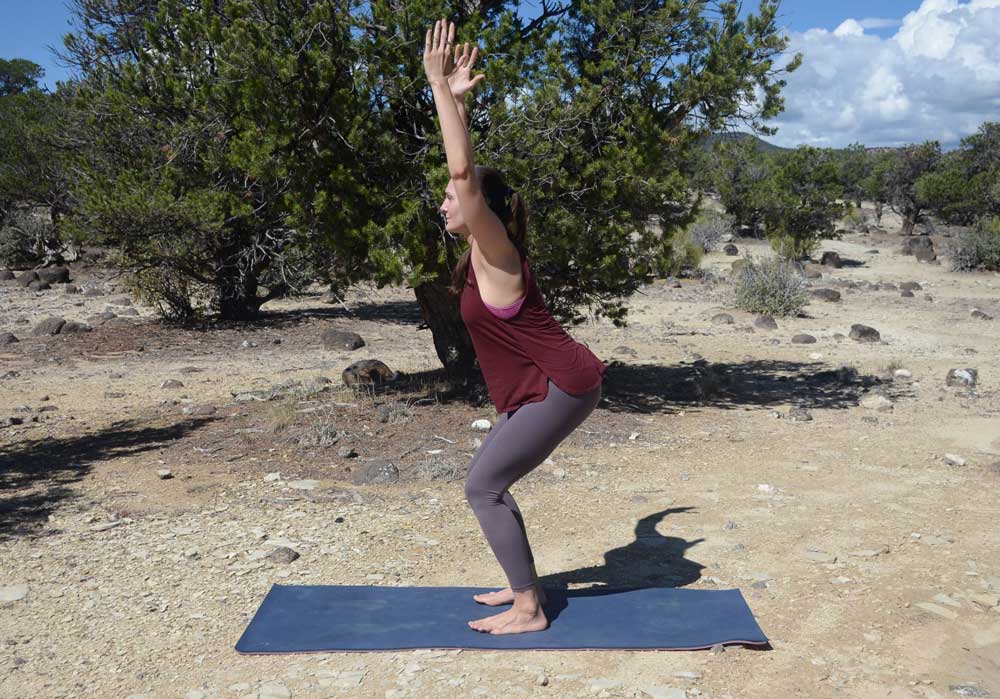
Chair Pose
Chair Pose is fantastic for creating a burn in the legs, glutes, back, and upper body. The longer you hold the pose, the more calories you can burn.
Tips: Hold this pose as long as possible, then take a break and return to the pose. Add variation by raising the toes and heels alternatively.
Downward Facing Dog
Downward Facing Dog is one of the easy yoga poses for weight loss. It’s also one of the most common poses.
This is also a great pose to tone and strengthen the arms, shoulders, and upper back.
Tips: To burn more calories while in Downward Facing Dog, you can try doing mini push-ups.
Or try reaching back with one hand to the opposite ankle; this move works on balance and tones the muscles in the side of body.
Plank Pose
Plank Pose is another great pose for strengthening the upper body. It also targets the core which can help reduce belly fat.
Tips: Hold this pose for a minute to feel the ultimate burn. Try picking up one hand at a time and bringing it to the opposite shoulder to bring even more burn to the core muscles.
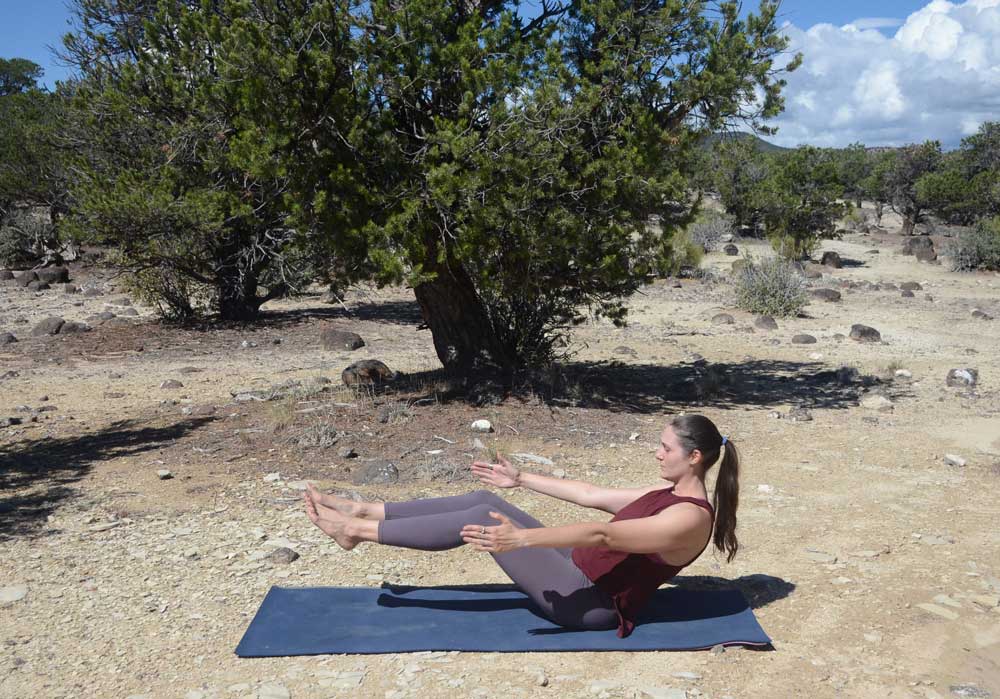
Boat Pose
Boat Pose is another one of the great yoga poses for burning fat. Specifically targeting the core can help slim the waist line and shed more pounds.
Tips: Bring the back closer to the mat behind you to make the pose more difficult. You can also try bringing each foot down to the mat one at a time for extra burn.
What’s your experience with yoga and weightloss? Share your story and comments below!
*This blog post is purely informational and is not intended to provide advice that should otherwise be given by a medical professional. All bodies are different and before starting any new activity or diet, check in with your medical practitioner.
Upper back pain is a common ailment due to our sedentary lifestyles. When we sit at a desk or drive for hours, our necks and upper back pay the price. We are left with poor posture, discomfort, or even pain.
The upper back region is also prime real estate for muscle knots, which is a primary cause of upper back pain. Stretching is a great cure for muscle knots as they can become painful if not treated early on.
To find relief in the upper back, stretching is a great way to release muscle tension and soothe the pain.
Check out these upper back stretches for pain below and practice them daily to not only relieve upper back pain but keep it from returning.
Can Stretching Relieve Upper Back Pain?
Yes, you can definitely relieve back pain with yoga and stretching. That’s because stretching has many benefits for the musculoskeletal body.
Here are 5 ways stretching can relieve pain:
Ease Tight Muscles and Stiffness
Yoga stretching works by literally loosening up our muscles. When we come into a static stretch, our muscles slowly start to give in to that stretch. The longer we hold the stretch, the more tension is released.
Improve Mobility
Regular stretching can improve or increase mobility. Stretching pushes the muscles and ligaments of the body past their normal range of motion.
It has been proven that stretching actually brings water into our muscles, which can help keep them supple and prevent further injury.
Encourage Blood Circulation
This will bring much-needed healing vitamins and minerals to your aching muscles.
10 Best Upper Back Pain Yoga Stretches
Follow this Upper Back Stretches For Pain Sequence below to find the ultimate relief for tension and general pain in the upper back.
All you need is a chair or a comfortable place to rest your knees like a carpeted floor, a yoga mat, or a towel.
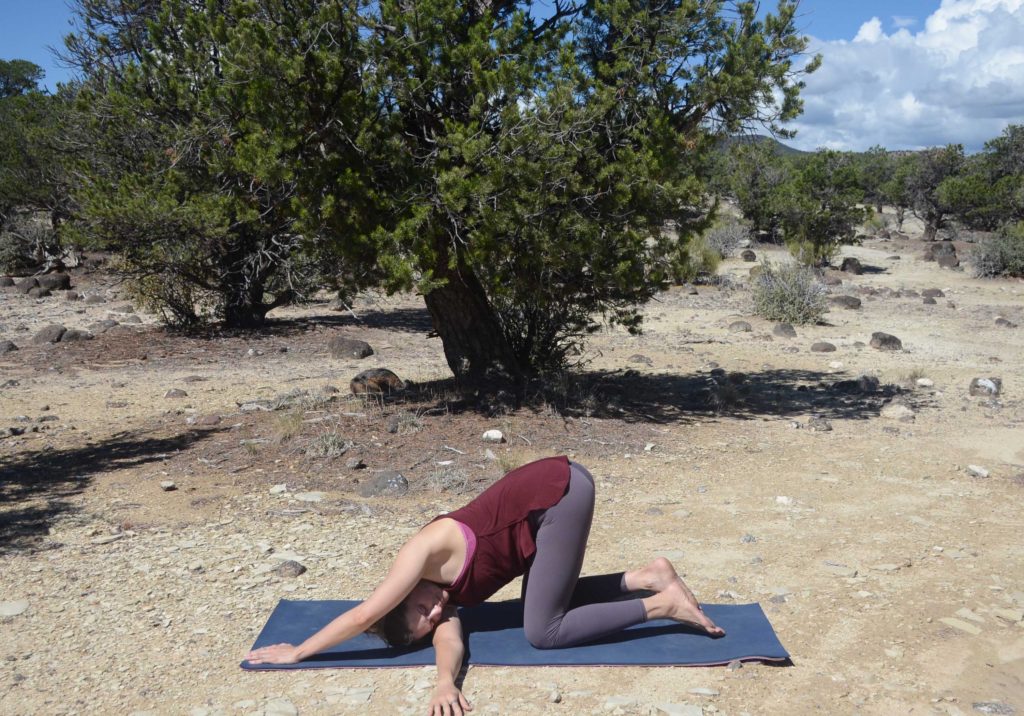
Thread The Needle
This is one of the best yoga poses to stretch the upper back area. It uses the weight and gravity of our torso to open up the upper back.
How To: Start in a table-top position with hands beneath the shoulders and knees underneath the hips.
Then bring the right arm across the body underneath the left armpit until the right shoulder can reach the ground. Rest the right shoulder and the head on the ground.
Tips: Try straightening the top arm which will make the stretch on the shoulder and shoulder blades more intense.
Hold for at least 20 seconds.
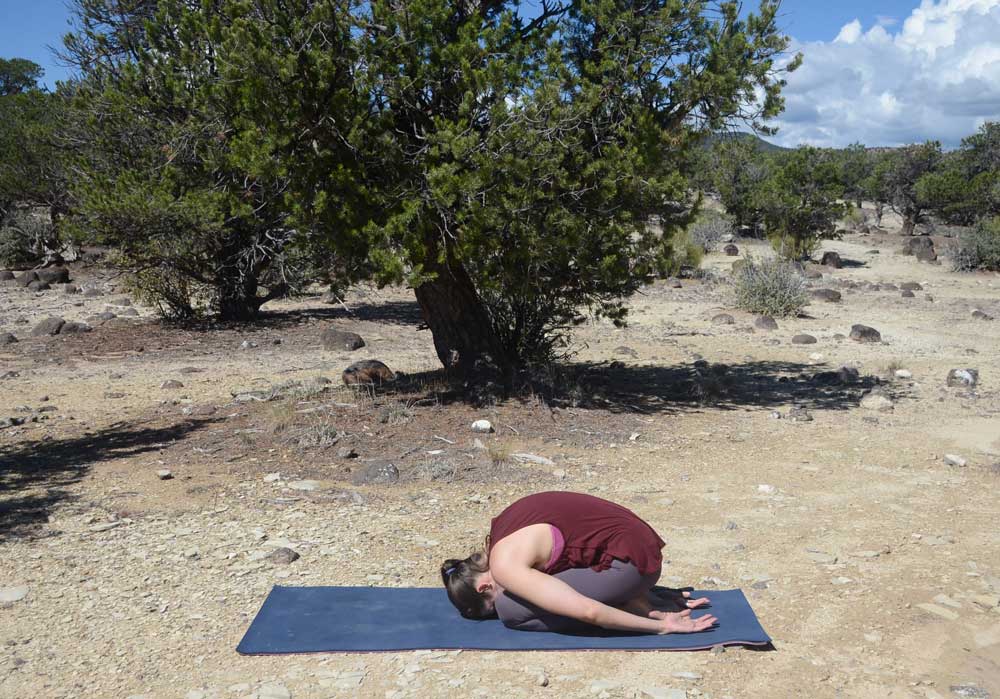
Child’s Pose Variation
Child’s Pose is a well-known pose to lengthen and stretch the spine and back. This variation specifically targets the muscles between the shoulder blades and trapezius muscles.
How To: Start in a table-top position or standing on your knees. With your knees together, sit back until you are sitting on your heels.
Then bring your chest onto your thighs and rest your head down on the mat just at the front of your knees.
Lay your arms by your side with your hands back toward your feet with palms facing up.
Tip: The farther you bring your head forward the deeper of a stretch you’ll feel in your spine and neck.
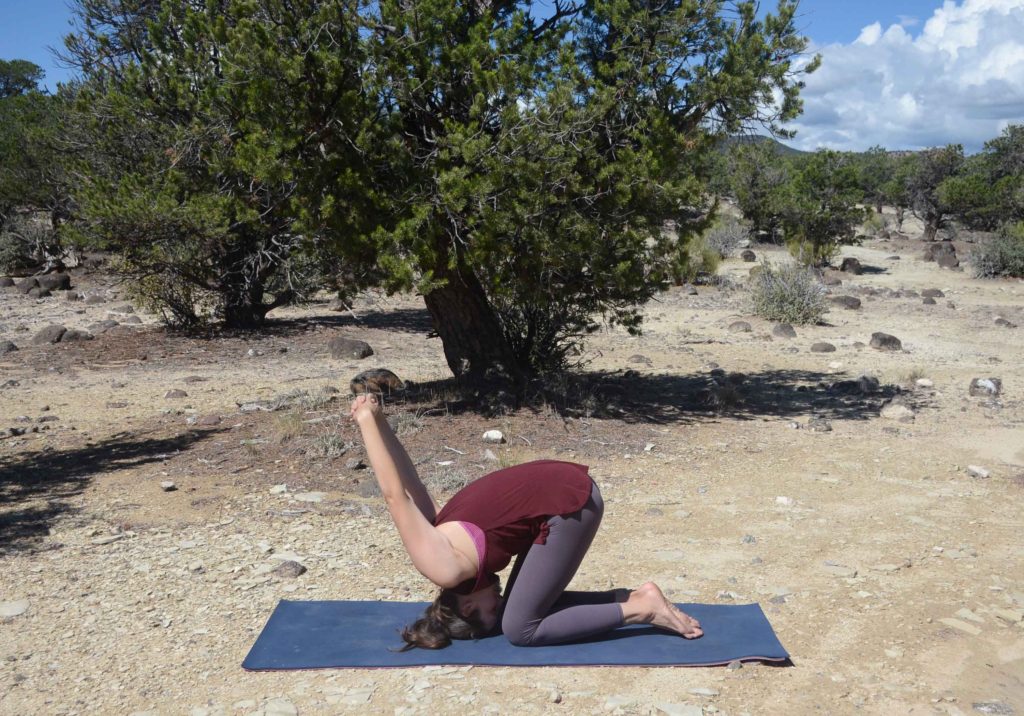
Rabbit Pose
Rabbit Pose is a great counter stretch. It will help unlock the back by loosening the muscles of the entire torso, front and back.
How To: Starting from the Child Pose Variation above, bring your hands to your lower back, then lift your hips up toward the sky.
Begin to bring your hands forward over your head in front of you as far as comfortably possible. The top of your forehead should be on the ground.
Tip: The shoulders are a delicate area so start slow in this stretch and only go to your edge.
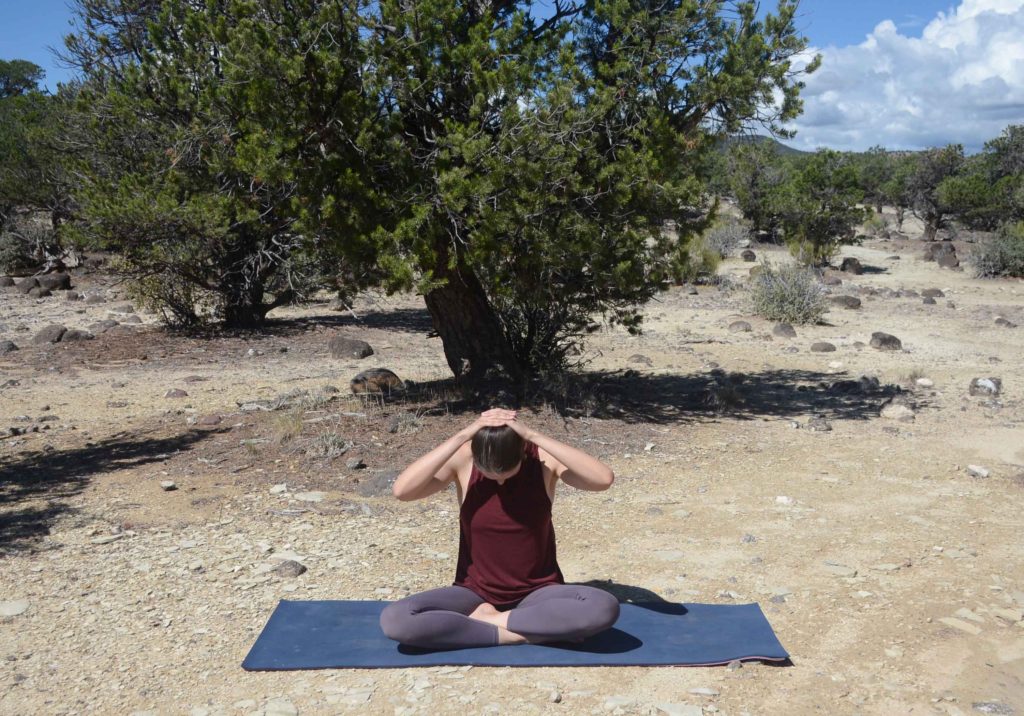
Trapezius Stretch
This is one of the best upper back stretches for pain as it targets between the shoulder blades. It’s one of my personal favorites because it’s so easy, effective, and can be done anywhere.
How To: Sit in a comfortable position with an upright spine. Bring both hands to the back of the head.
Slowly bring your chin toward your chest while keeping the spine tall. Gently use the gravity of your hands to pull your head toward the ground in front of you.
You should feel a stretch concentrated on the upper back.
Tips: Don’t pull too hard with your hands, just use a gentle pull to slowly release tension in the upper back.
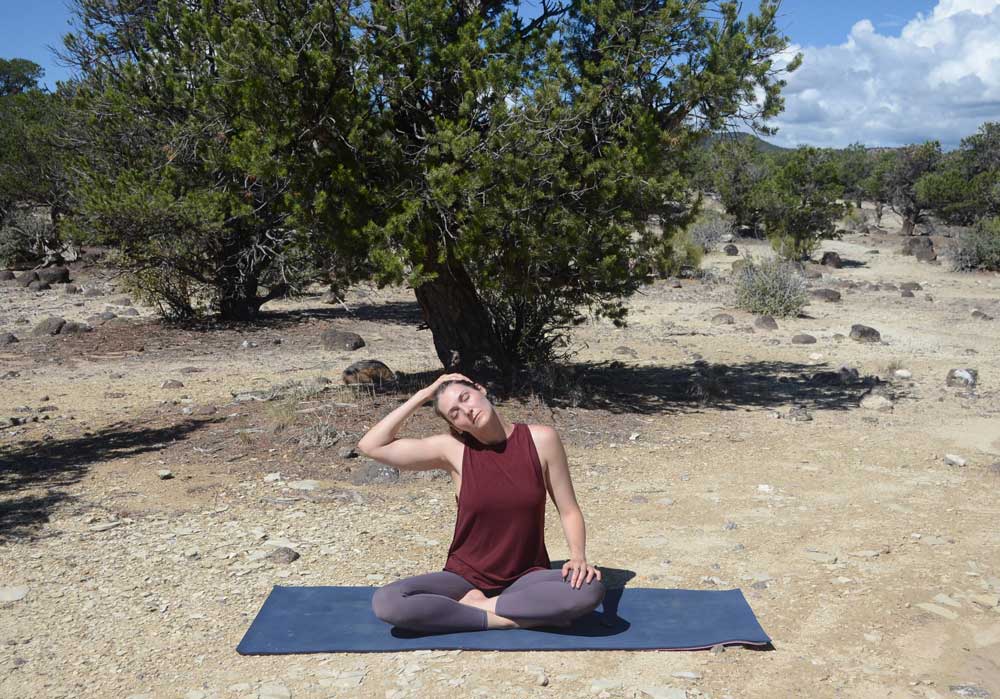
Side Neck Stretch
Here’s another easy yet effective stretch to release upper back tension. This pose can be done anywhere, even sitting at your desk.
How To: Sitting up nice and tall, bring one hand to the opposite side of your head. Gently use the traction of the hand to gently pull and open up one side of the neck.
Tips: Be gentle and use light pressure to achieve the stretch.
You can also try rocking your head forward and backward to find the sweet spot that really needs the most release.
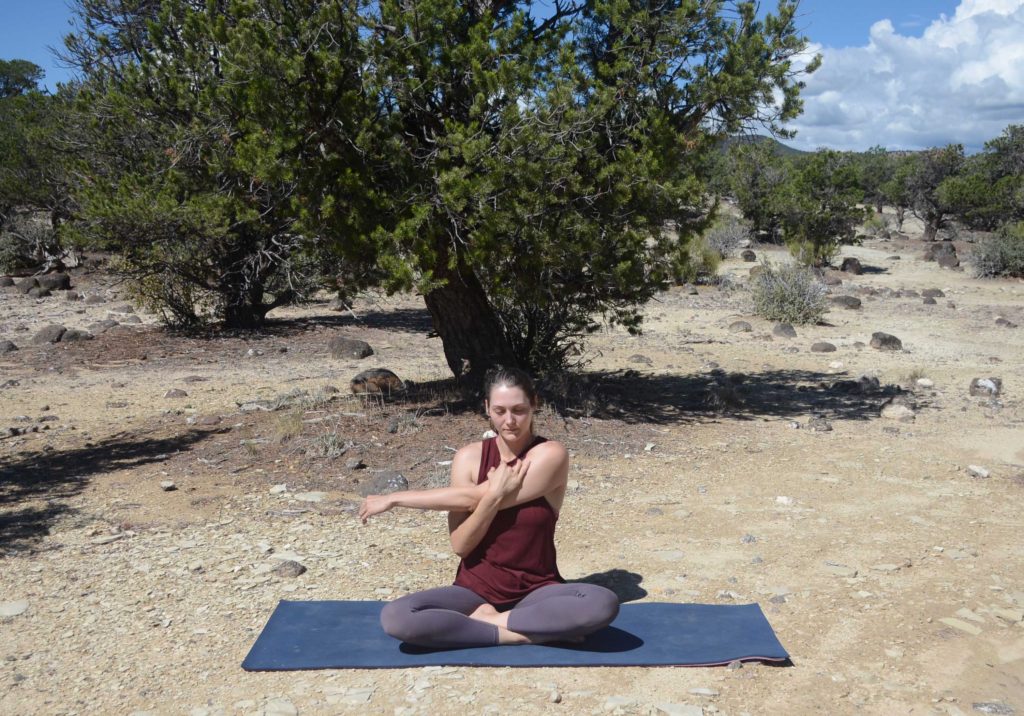
Cross-body Arm Stretch
This is a classic and effective stretch targeting the muscles between the shoulder blades.
How To: Sitting up straight, take one arm across the body. With the opposite hand, add some pressure until you feel the stretch.
Tips: Make sure to avoid holding the arm at the elbow. Hold the pose for at least 20 seconds.
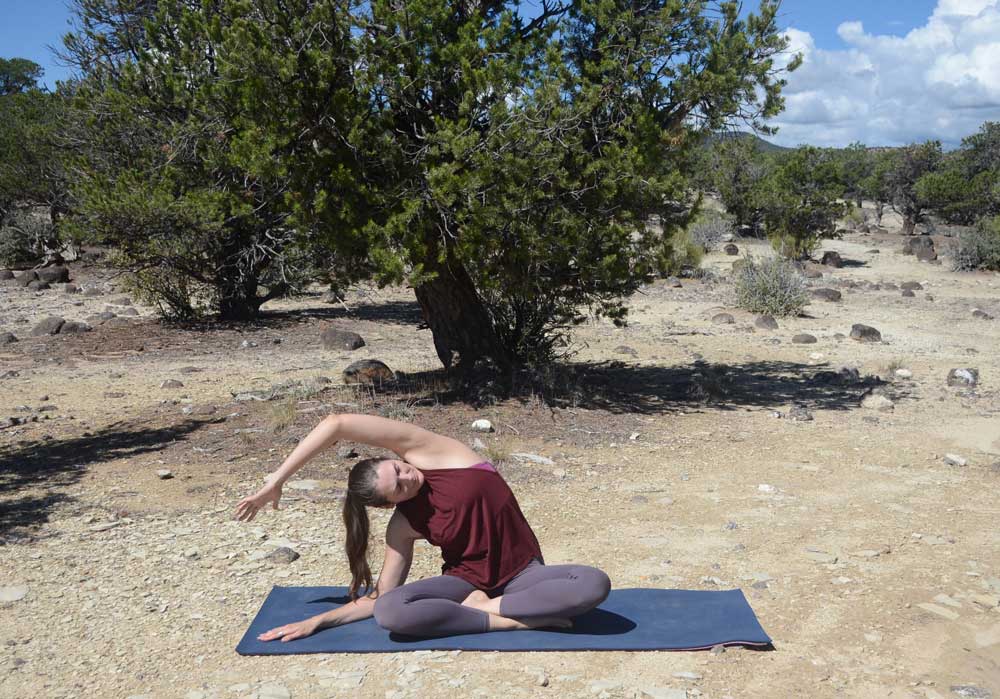
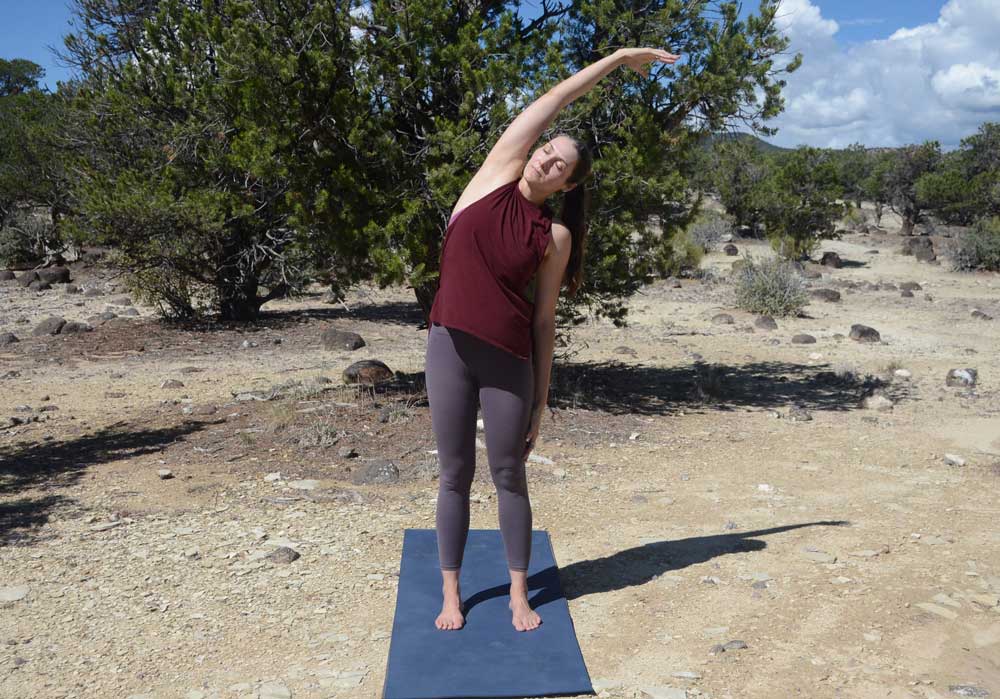
Seated & Standing Side Bend
These poses are great variations to target the sides of the upper back and get deep into a different set of muscles in the back.
How to: This pose can be done either sitting or standing. Bring one hand over the head as far as you can, then reach with your hand over your head.
Tips: Keep the spine straight and try not to dip the torso forward or backward. The farther you reach your hand the deeper of a stretch you’ll feel.
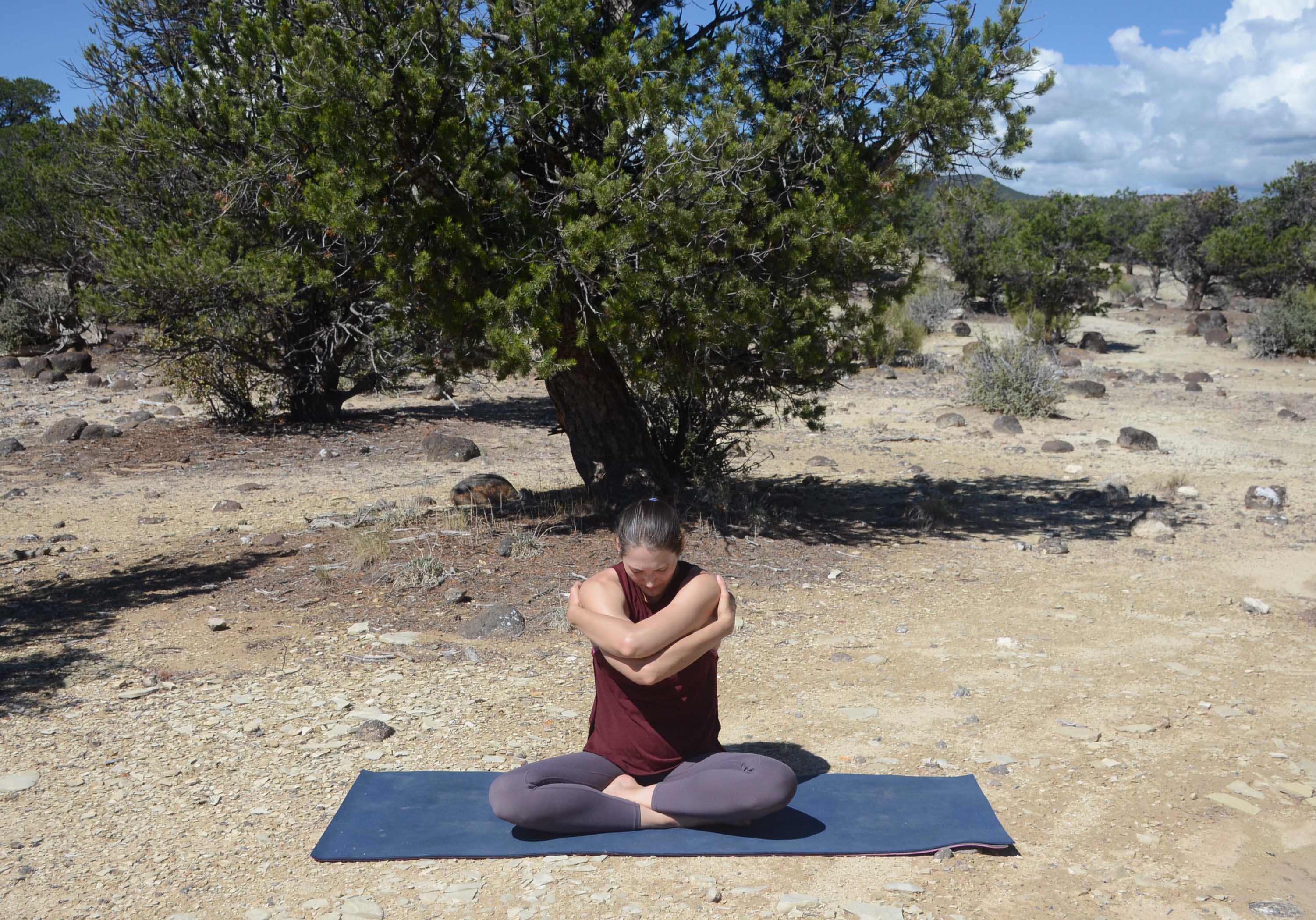
Bear Hug
This yoga stretch for the upper back is very targeted and effective for relieving tension. Plus, it’s another pose that can be done practically anywhere.
How to: Start by sitting up tall. Cross your hands our in front of your body and grab onto either shoulder. Then bring the elbows up toward the face. Push the elbow out in front of you as far as you can.
Tips: For an extra stretch, bring the chin down toward the chest. Just make sure to sit up straight the entire time.
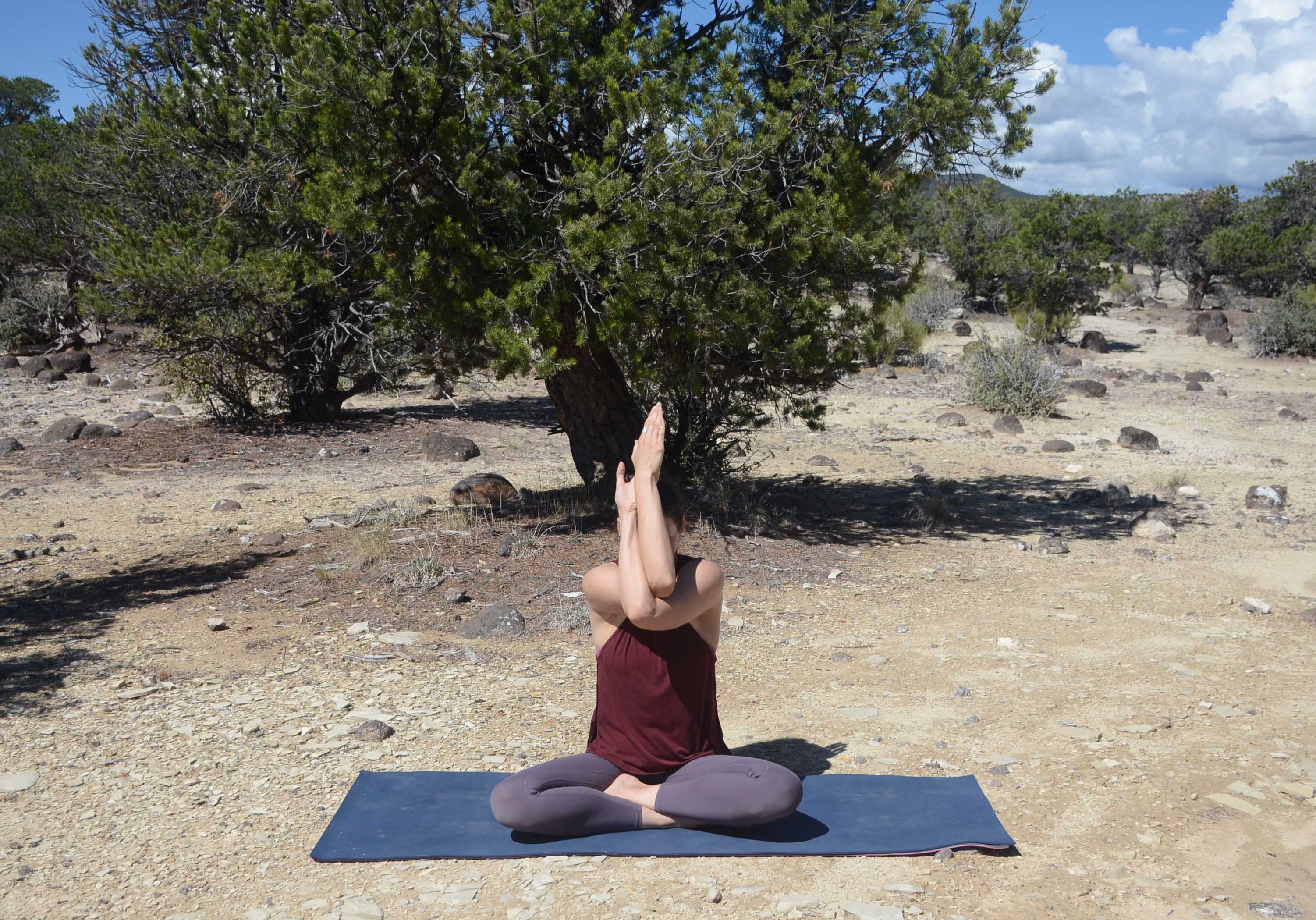
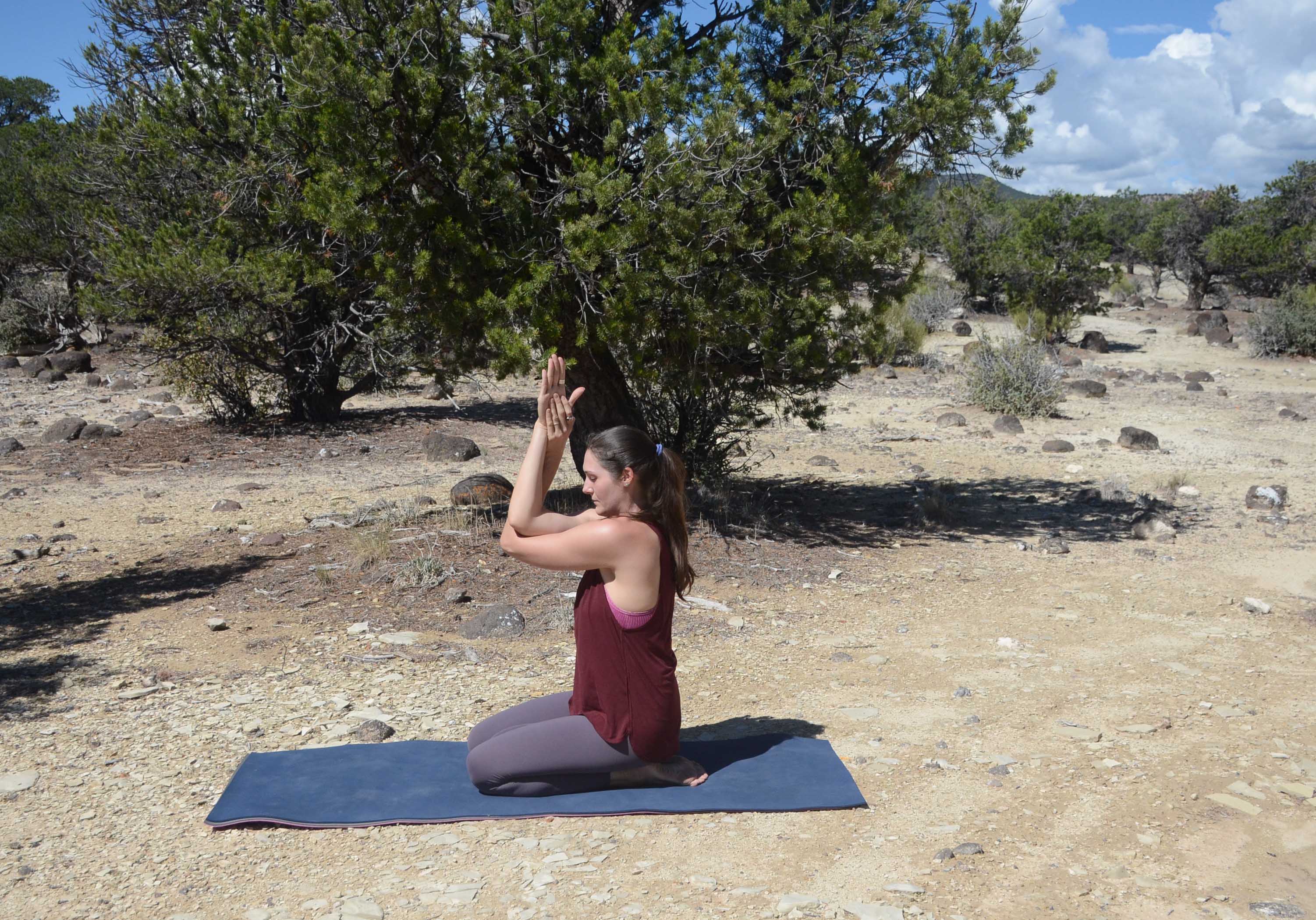
Eagle Pose
One of my favorite yoga poses because it feels so good on the upper back and shoulders. It looks like a difficult pose but it’s quite easy.
How To: Start seated, standing, or sitting on your knees. Bring your arms out in front of your face. Then cross one elbow on top of the other.
Bring your hands in toward your face, and if possible try to bring either palm together.
Then push the elbows out in front of you making them parallel with the ground.
Tips: The higher you raise the elbows the more of a stretch you’ll feel. Keep the spine erect.
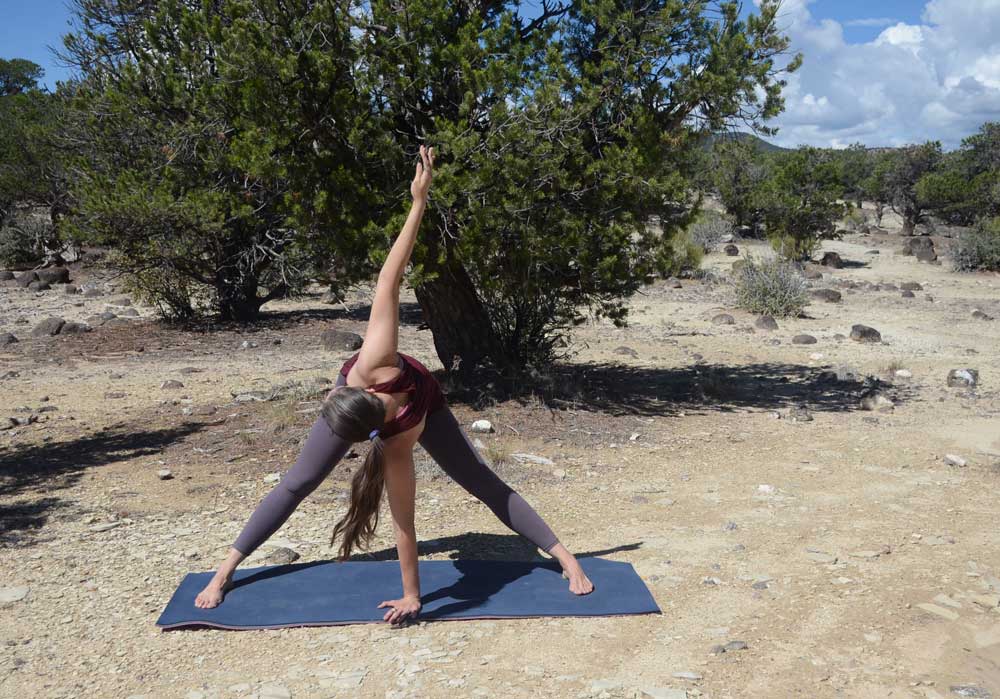
Wide-legged Forward Fold Twist
This twist is to squeeze out any tension still left in the upper back after all the above exercises. It’s great because it adds a new level of mobility to the upper back muscles.
How To: Bring your feet wide with toes slightly facing inward. Start to fold forward until your head points toward the ground in front of you.
Place one hand on the ground just underneath your face, and then bring the opposite hand up toward the sky as straight as possible.
Tips: Using a block underneath the bottom hand is great for beginners. Reaching the hand over the head behind you will make the twist more intense.
Bonus: Use A Foam Roller To Roll Out The Pain
Foam rollers are a great tool to add to your wellness routine. A good foam roller is versatile and can be used to soothe all sorts of pain and is also a tool for exercising.