

Writing a yoga description is one of the first steps to filling your yoga class with students. It might seem like a daunting task, but in this blog post, we will break down everything you need to know on how to write a killer yoga class description.
Read on to learn:
- The main components of a yoga class description
- How to make your description stand out
- And plenty of *actual* yoga class description examples to inspire you.
- What Is A Yoga Class Description
- Main Components Of A Yoga Class Description
- Importance Of Writing A Well-Crafted Yoga Class Description
- Know Your Class & Be Consistent
- Crafting a Compelling Title
- Setting Expectations
- Include Critical Details
- Keep The Tone Positive, Encouraging, And Inviting.
- Actual Yoga Class Description Examples
- Create Your Yoga Description Today!
What Is A Yoga Class Description
A yoga class description is a concise yet informative summary that outlines the details, style, and atmosphere of a yoga class.
It typically includes information such as the type of yoga practiced (e.g., Hatha, Vinyasa, Yin), the level of difficulty or intensity, any unique features or focuses (e.g., meditation, alignment, breathwork), and practical details like location, schedule, and instructor credentials.
The yoga class description is the compass that potential students will use to decide what class they will join.
Main Components Of A Yoga Class Description
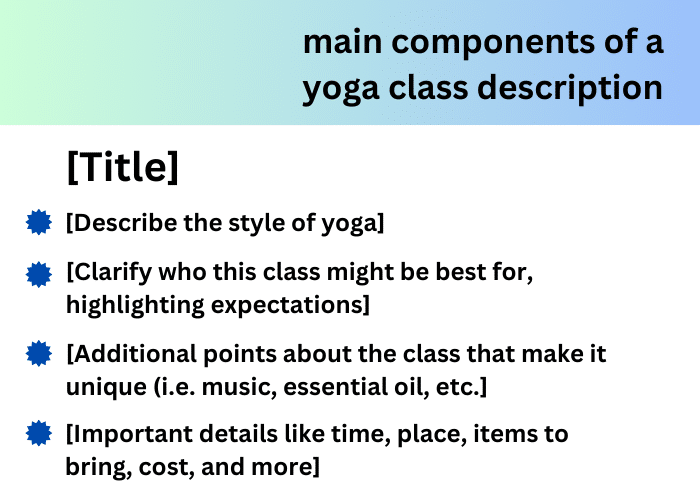
A yoga class description can be broken down into it’s most important parts. This can make it easier to organize the most important information about your class and present it in an easy-to-read format
- Title – Create an appealing yet accurate title to catch people’s attention.
- Describe the style of yoga – In the first few sentences describe the overall style of yoga used in the class.
- Clarify who this class might be best for, highlighting expectations – Make sure to add critical information about who this class might be best for and/or describe the expected energy of the class.
- Additional points about the class that make it unique (i.e. music, essential oil, etc. – Make sure to include a sentence or two about what makes the class unique or anything else students should know.
- Important details like time, place, items to bring, cost, and more – If this information is not already available through your studio, make sure to add it at the end of your class description.
When describing the class format in your yoga class description, it’s essential to provide a clear overview while also infusing it with your unique teaching style and the essence of the class experience. Here’s some advice on how to do it effectively:
Start with an Introduction: Begin by introducing the class format in a concise and inviting manner. For example, “Join us for an energizing Vinyasa flow class designed to build strength and flexibility while connecting breath with movement.”
Outline the Structure: Provide a brief outline of how the class will flow, including any key components or sequences. For instance, “We’ll start with a grounding meditation, followed by a dynamic flow series, and wind down with restorative poses and savasana.”
Highlight Key Elements: Highlight any unique features or focal points of the class that set it apart from others. This could include specific yoga styles practiced, thematic elements, or specialized techniques incorporated. For example, “This class integrates elements of Kundalini yoga to awaken energy centers and enhance vitality.”
Clarify Level and Intensity: Clearly communicate the level of intensity and difficulty of the class to manage expectations for participants. Whether it’s a gentle beginner-friendly class or a vigorous advanced-level practice, be transparent about what students can expect. For instance, “Suitable for all levels, modifications will be offered to accommodate varying abilities.”
Express the Experience: Use descriptive language to evoke the experience of the class, painting a picture of what participants can anticipate. Whether it’s a dynamic and invigorating flow or a slow and meditative practice, convey the atmosphere and energy of the class. For example,
End with an Invitation: Conclude the description with an invitation to join the class, emphasizing the benefits and experience awaiting participants. Encourage readers to take the next step and experience the class firsthand. For example, “All are welcome to join this uplifting and empowering practice. Come as you are and let’s flow together!”
“Get ready to sweat, smile, and surrender as we flow through sequences designed to awaken body and mind.”
By following these tips, you can effectively describe the class format in your yoga class description, enticing potential participants while providing clarity and setting expectations for the experience ahead.
A. Providing an overview of the structure and flow of the class. B.
Describing specific yoga styles or techniques incorporated. C.
Mentioning any unique features or highlights of the class.
Importance Of Writing A Well-Crafted Yoga Class Description
A well-crafted yoga class description can be a powerful marketing tool that can impact the success of a yoga class or studio.
Here are several reasons why you should spend time creating a well-written yoga class description:
Attracts the Right Audience: By accurately describing the style, intensity, and focus of the class, a well-written description helps attract individuals who align with the class’s offerings. This ensures that participants have realistic expectations and are more likely to enjoy and benefit from the experience.
Establishes Credibility: A thoughtfully crafted description reflects professionalism and expertise, enhancing the credibility of the instructor or studio. It communicates that the class is well-planned and led by knowledgeable instructors who prioritize the well-being and satisfaction of their students.
Differentiates from Competition: In a crowded market of yoga classes, a unique and compelling description sets a class apart from competitors. Highlighting special features, teaching philosophies, or the studio’s values can attract those seeking a specific experience, fostering brand loyalty and repeat attendance.
Communicates Benefits: An effective description communicates the benefits participants can expect to gain from attending the class, whether physical, mental, or emotional. This helps individuals understand how the class aligns with their goals and motivates them to prioritize their practice.
Increases Engagement: Engaging and inviting language in the description can capture the reader’s attention and evoke curiosity, encouraging them to learn more or take action, such as signing up for the class or contacting the studio for inquiries. This leads to increased engagement and participation.
Builds Community: A well-crafted description can also contribute to building a sense of community within the studio or yoga space. It conveys warmth, inclusivity, and a shared commitment to personal growth and well-being, attracting like-minded individuals and fostering connections among participants.
Related Posts:
101 Crazy Unique Theme Ideas For Yoga Classes 💡
Yoga Teacher Gift Guide – Get Something They Will Really Use
Best Yoga Charities And Non-Profit Yoga Organizations For A Better World
Know Your Class & Be Consistent
It’s essential to teach classes that are consistent with your yoga class description for several reasons. Firstly, consistency builds trust and credibility with your students. When they attend a class that matches what was promised in the description, they feel confident that they made the right choice and are more likely to return.
Secondly, alignment between the description and the actual class experience ensures that students know what to expect, leading to a more positive experience overall. This alignment also helps attract the right audience to your classes, as those who resonate with the description are more likely to attend and appreciate your teaching style. Finally, teaching classes consistent with your description maintains the integrity of your brand and teaching philosophy, strengthening your reputation within the yoga community. Overall, consistency between your class description and the actual class content is crucial for fostering trust, attracting the right students, and maintaining a positive reputation as a yoga instructor.
Crafting a Compelling Title
In the realm of yoga class descriptions, the title serves as the gateway to your class, offering a glimpse into the experience awaiting potential participants. Crafting a compelling title is more than just stringing together words; it’s about encapsulating the essence of your class in a way that captivates and intrigues. A well-crafted title not only grabs attention but also communicates the unique benefits and vibe of your class, enticing readers to delve deeper into your description. From invoking curiosity to highlighting key features, mastering the art of title creation can significantly enhance the visibility and appeal of your yoga offerings.
- “Zen Flow: Find Inner Peace Through Gentle Movement”
- Phenoix Flow
- “Power Vinyasa: Ignite Your Strength and Transform Your Practice”
- Gentle Vibes
- “Serenity Now: Dive Deep into Relaxation with Restorative Yoga”
- “Yin & Yang: Balancing Body and Mind with Dynamic Duo Yoga”
- “Sunrise Salutations: Awaken Your Body and Energize Your Soul”
- “Meditation Magic: Cultivate Clarity and Calmness in Every Breath”
- “Yoga for Every Body: Inclusive Practice for All Levels and Abilities”
- “Mindful Movement: Explore Presence and Connection Through Yoga Flow”
- “Strong & Centered: Build Stability and Confidence with Core Yoga”
- “Glow & Flow: Radiate Positivity and Vitality with Glow Yoga”
Setting Expectations
Make sure to clarifying the level of intensity, pace, and difficulty of the class and mention any prerequisites or recommended experience levels.
Communicating any special requirements or equipment needed. You can also explain the “vibe” of the class or what the physical classroom is like so people get an idea. And of course mention if it is an indoor or outdoor class.
Include Critical Details
Include essential logistical information such as location, schedule, and duration. Mentioning any registration or booking requirements.
Be sure to offering contact information for inquiries or further assistance.
Keep The Tone Positive, Encouraging, And Inviting.
In summary, a well-crafted yoga class description serves as a gateway for individuals to discover, connect with, and ultimately participate in a yoga class. It plays a vital role in shaping perceptions, setting expectations, and ultimately influencing the success and impact of the class or studio.
Actual Yoga Class Description Examples
Here is a list of actual yoga class descriptions currently in use by studios in major cities. Use these examples to draw inspiration to create the best yoga class description for your specific class and style
Align & Explore
75 min
This class provides a combination of healthy alignment and the freedom to play within familiar and new poses. From beginners to seasoned practitioners, this class hopes to broaden the range of capabilities of each person through the instruction of alignment and breath. This physical practice is offered with some yoga philosophy, music, and perhaps some humor.
Body Strong
a 60 minute mindful body weight strength training session to activate, flex and build strength. The session will begin with a warm up to open the body followed by a series of dynamic movements and cardio to strengthen key areas of the body including arms/shoulders, core and lower body/hips. Optional equipment: bring your own weights 5-15 pounds
Yin Yoga
SWEET, SLOW, STEADY MOVEMENTS CHARACTERIZE OUR YIN YOGA CLASSES. YOU CAN EXPECT TO STAY A BIT LONGER IN EACH POSE, TYPICALLY THREE TO FIVE MINUTES, ALLOWING FOR DEEPER LAYERS OF CONNECTIVE TISSUE TO RELEASE. WE USE PROPS—BLANKETS, BOLSTERS, MFR BALLS, AND BLOCKS—SO FEEL SUPPORTED AS YOU RELEASE TENSION. EXPECT TO LEAVE THE CLASS FEELING CALM, CENTERED, AND SPACIOUS. ALL LEVELS ARE WELCOME.
Vinyasa Flow
Vinyasa is a fluid practice that closely links the breath to the movement. Vinyasa Flow classes are more physically rigorous than gentle ones, and we do not recommend them for beginners. The level of intensity will vary between instructors. It’s a great idea to get into a variety of the Vinyasa classes, as well as read our teachers’ bios, so that you can get a sense of the teaching style(s) that work the best for you. MOST of the Vinyasa classes on our schedule are mixed level.
Yogalete
A form of active recovery that will stretch and lengthen your entire body. Whether you are an athlete or weekend warrior, this class will help improve your overall performance, quicken your recovery process, and lessen the occurrence of injury. This class is the perfect in-between of a Restorative Flow and Vinyasa Flow class. We set the temperature to 80 degrees. All levels welcome.
Toddler Yoga
This class is for toddlers ((around 1 – around 4 years old)) and their parent, nanny, grandparent, any caregiver!
Come and meet your community of toddlers and friends through this fun and playful approach to yoga with your little one! We will incorporate yoga postures, mindfulness, songs, gentle movement, music and quiet time.
15 minutes of each class will be dedicated to community connection.
This is a series, you must register and pay for all 6 classes. The series is non-refundable after it’s start.
Create Your Yoga Description Today!
Now you have all the tools to successfully create a compelling, correct, and evergreen yoga class description that will bring in new clients! Best of luck.

0 Comments