Yoga is quickly becoming a workout of choice among many different groups of people, and that’s for a good reason. Yoga provides a relaxing, yet invigorating workout that has mental health benefits, physical benefits, and overall well-being perks.
You also may be wondering if yoga is good for weight loss. Just like all other forms of physical activity, you can most definitely lose weight by practicing yoga. This is because it has both cardio and strengthening elements. There are also many different styles of yoga that you can choose from to see what suits your needs and preferences best.
But many people wonder, is yoga exercise good for weight loss? We will illustrate how to lose weight by practicing yoga in this article.
Yoga is considered a physical exercise, just like with any other exercise or workout, it’s 100% possible to lose weight with yoga. Yoga is not just physical though, many people fall in love with the combination of physical activity and mental exercises that produce a sense of calm in their lives.
In fact, many people begin their yoga journey with weight loss goals in mind and are able to not only lose weight but keep it off.
Fat loss works in 2 traditional methods; reducing caloric intake, and by burning calories with physical exercise by bringing the heart into the “fat-burning zone.”
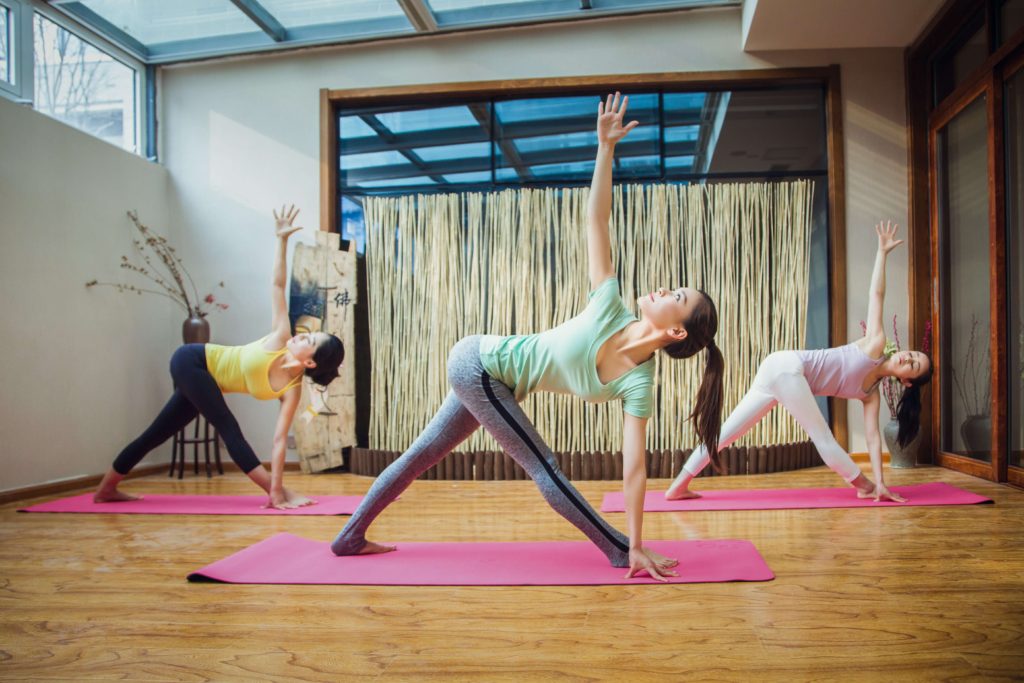
Through a yoga class, you can raise your heart rate high enough to enter the fat-burning zone which can result in shedding pounds.
Many yogis attend a class once to a few times a week which is sufficient for both maintaining and losing weight.
How Do You Lose Weight With Yoga?
The best way to achieve weight loss with your yoga practice is to combine healthy, conscious eating with a rigorous yoga practice schedule.
You can begin by practicing 1 hour of yoga at least once a week. This meets the USDA’s guidelines of getting 150 minutes of moderate aerobic activity a week for optimal health.
Additionally, just 30 minutes of physical exercise per day has been shown to promote weight loss. There are plenty of online yoga videos that offer a 30-minute class, free of charge!
To boost weight loss, increase the amount of yoga exercise you do weekly. Complementing yoga with other exercises like walking, jogging, or strength training may take you closer to your weight loss goal.
Try out different classes.
How Much Weight Can You Lose By Doing Yoga?
Yoga can be a tool to reach your weight loss goals. With any weight loss plan, success depends on a variety of factors.
If you reduce your calorie intake by 500 per day, as well as burn an additional 500 calories through exercise, you can expect to lose about 2 lbs per week.
This is considered a safe and typical amount of weight to lose in one week when combining exercise with calorie restriction.
Although physical exercise can help achieve weight loss, the best way to lose weight is to eat healthily and reduce daily calorie intake.
Since losing weight is dependent on reducing calorie intake, the more calories you burn equals the more weight you could potentially lose.
Each type of yoga offers a different level of exertion and finding the right type for your experience level and body type is key.
The best kind of yoga for fat burn is Power or Vinyasa Yoga. In one class you could burn upwards of 800 calories. It’s so efficient at burning calories because the heart rate stays elevated for almost the entire class, which is usually 75-90 minutes long.
Keep in mind this class should only be attempted by people who are in general good health and get the go-ahead from their doctors to practice vigorous cardio exercise.
Here is a breakdown of how many calories 60 minutes of each type of yoga burns:
Practicing yoga helps build a healthy lifestyle and positive mindset. This can help people keep the pounds off and keep losing weight even off the mat.
Better Sleep
Yoga has been proven to improve sleep. It can help keep you fall asleep faster and sleep longer, deeper, and experience fewer wakings.
Having good sleep health has also been proven to help us lose and keep weight off. When we have poor sleep habits our metabolism doesn’t operate as efficiently.
If you want to lose weight, you must get good sleep, and a yoga practice can help you achieve that.
Better Mental Health
Having a better mindset is key to achieving goals like losing weight. Yoga can reduce symptoms like anxiety and depression.
Many people tend to gain weight when they are unhappy, so bringing positivity and joy into your life will help with losing weight.
Less pain may equal a more sustained and healthy lifestyle and eliminate bad habits like binge or comfort eating to soothe pain.
Motivation From Peers
Yoga usually is a group activity and when you regularly visit a yoga studio, you become part of an awesome community of great people (yogis!)
Being around other healthy and active people is probably one of the most powerful ways one can achieve their health-related goals.
How Much Yoga To Lose Weight?
Like any other exercise, the key to losing weight with yoga is to stay consistent. Weight loss happens by expending more calories than you intake.
Depending on the type of yoga, a daily calorie deficit can be achieved with a 30-minute to 1-hour yoga class.
Some people are also able to lose weight by eating healthy and doing only one to two yoga classes per week. Regardless, of how much yoga you do, you should start focusing not only on physical exercise but nutrition.
*This blog post is purely informational and is not intended to provide advice that should otherwise be given by a medical professional. All bodies are different and before starting any new activity or diet, check in with your medical practitioner.
The yoga class is winding down and you finally hear your yoga instructor say, “Now for our final pose… Savasana.” And you and everyone else in the class release a little internal sigh of relief.
Savasana can be loved or hated depending on the day or your personality; some people love the relaxation and just want to fall asleep, others want savasana to end as soon as possible.
But why do we even do savasana at the end of each class and why is it considered so important? Read on below to find out everything you need to know about this magical pose.
What is Savasana or Corpse Pose?
Savasana or Corpse Pose is a yoga pose performed at the end of every yoga class. It is considered a “restorative” yoga pose as it works to calm the body and restore it to its optimal state.
The Sanskrit word Savasana comprises of two words; “shava” meaning corpse,” and “asana” meaning pose.
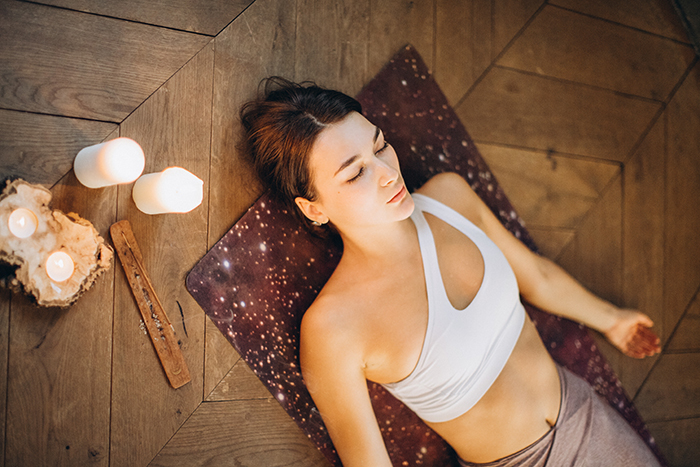
It is performed by lying flat on the back with the feet slightly splayed and hands by your side with palms open toward the sky. Practioners let the body sink into the mat and lay still for a few minutes to rest after a yoga class.
The goal is to simultaneously relax the body while maintaining total-body awareness; this is not a pose meant for falling asleep (though many people do!)
It is a pose of ultimate surrender and has many benefits. Despite it seeming very “easy,” it is quite difficult because you must quiet the mind and remain still.
Savasana is best described as mindful rest.
Why Is Savasana The Most Important Pose After A Yoga Session?
Letting the body rest in Savasana Pose after yoga or any workout allows the body to fully integrate the physical exertion of the workout.
Practicing a Savasana Pose at the end of every yoga class also lets the nervous system slow down.
The pose allows your body time to “digest” the yoga practice, letting all the stretching sink into the muscles before we get up off the mat and begin moving again.
It’s also a chance to set an intention and to bring peace to the rest of our day.
Why Is Savasana The Hardest Yoga Pose?
Some yogis consider this seemingly easy pose as one of the hardest, simply because it’s a pose lacking movement. And yes, many of us these days have a hard time sitting still.
While in this pose, our minds can wander or we may get “antsy.” Ideally, we are meant to focus on the body and bring ease to any tension that may be leftover after the yoga practice.
This pose can be particularly difficult for people with ADHD, or if you are angry or upset. This pose is a great teacher as it can show us our weak points in regards to relaxation and patience.
How Long Should You Hold Savasana?
Savasana Pose is most beneficial when you stay in the pose for at least 3 to 5 minutes. Some practitioners claim a real Savasana is 10 to 20 minutes long.
Any amount of relaxation at the end of yoga or even a strength-training workout is going to greatly benefit the body and further enhance the results of the workout.
Aim for at least a 3-minute Savasana Pose at the end of each practice.
What Are The Benefits of Savasana?
Savasana gives your body a chance to bring the heart rate and breath back down to their normal rate.
Organs can also recover and come to homeostasis. Savasana is especially important after high-exertion exercises like Power or Hot Yoga and HIIT workouts. Savasana gives our bodies the proper recovery it needs.
Allowing ourselves to come to a complete rest in Savasana after a high-powered workout will also give the rest of our day a sense of peace and calm.
Many people who practice yoga know about the “Yoga High” that you get after class. This high might well be kick-started by the Savasana Pose because we are allowing ourselves to slow down and feel it.
Potentially help with insomnia, digestion, and increased immunity
Is Savasana Meditation?
Savasana Pose is considered a type of meditation because we must keep a high level of awareness throughout the pose. In this pose, we are trying to quiet our “monkey mind,” and bring ultimate relaxation to our physical selves.
Meditation can happen in any sort of pose, Savasana being one of them.Meditating regularly has many benefits which is another reason to practice Savasana at the end of each yoga practice and workout.
Meaning And Symbology Of Savasana Pose
Yoga can be a very spiritual practice for some, and many of its poses evoke symbology like Warrior Pose, Tree Pose, and Half-Moon Pose.
Savasana Pose comes at the end of a yoga class, that yoga class representing a life. At the end of our movement, we die, only soon to be reborn again.
Within the pose of Savasana, our bodies fall to the wayside and we are only left with our consciousness, a symbol of the circle of life. When we are slowly waking our bodies back up, it symbolizes being reborn, with many practitioners pausing in the fetal position just before arising.
Practicing Savasana Pose is a reminder to enjoy every moment and live life to the fullest.
How do you practice Savasana Pose and how does it make you feel? Leave your comments below!
The neck is one of the most intricate muscular systems in the body with 26 individual muscles. These muscles extend down into the upper back, front of the chest, and into the face. Our everyday lives contribute to making this group of muscles particularly stiff and sore.
To keep the neck from becoming tight and stiff, practice this short and easy yoga sequence for stiff neck below daily. You can even practice these poses several times a day for even better results.
Neck Rolls
This is one of the most effective yoga poses for neck pain relief. Plus it’s easy to do this pose often and almost anywhere, all you need to do is sit or stand up with an erect spine.
Start in a comfortable seated upright position either on a mat or in a chair.
Close your eyes and bring your attention to the pain or stiffness in the neck area.
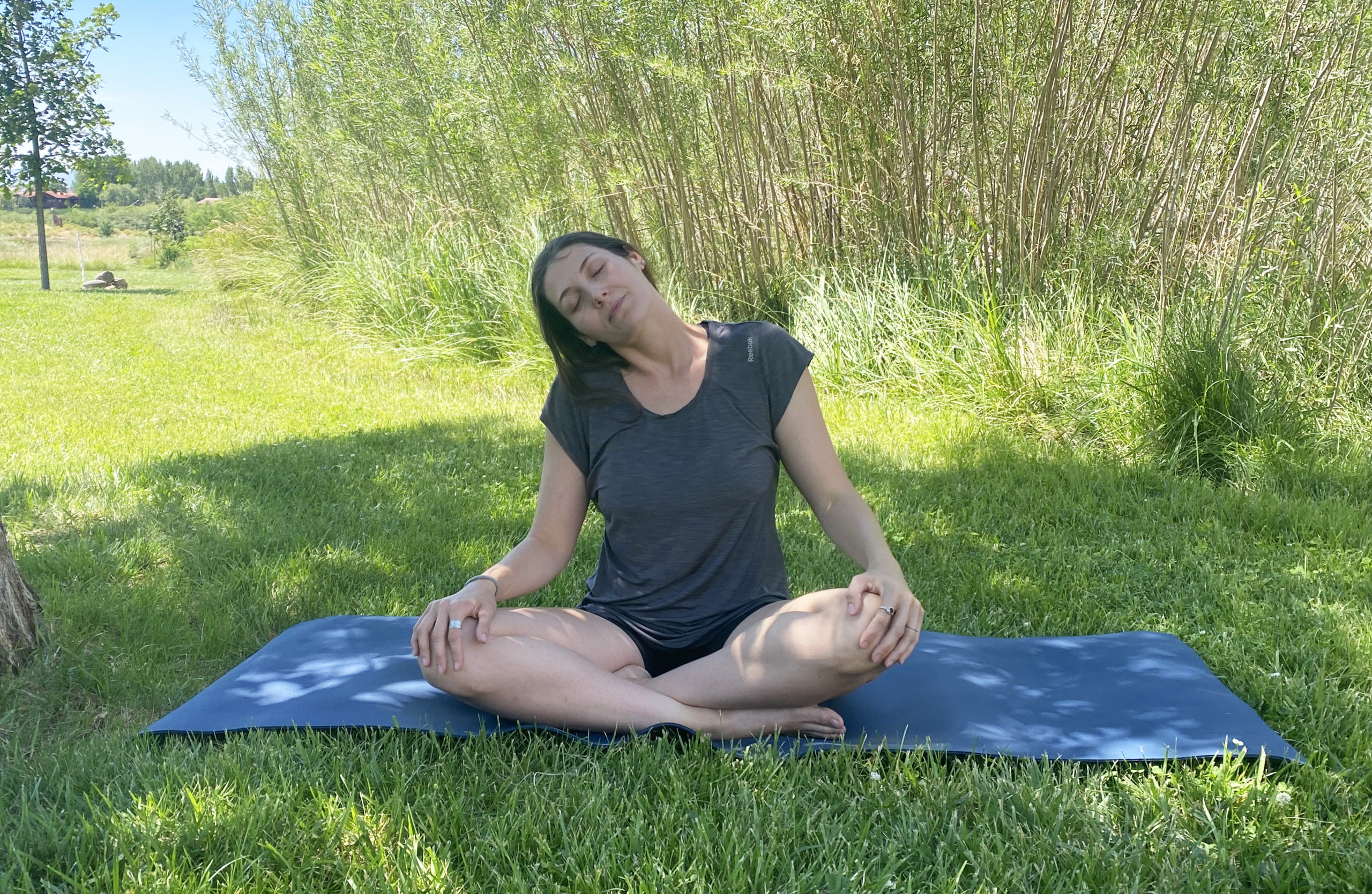
Begin by bringing the right ear toward the right shoulder, and make sure to maintain an upright posture.
Then bring the forehead down toward the floor in front of you, and slowly continue rolling the neck toward the left until the left ear is above the left shoulder.
Finish one circle by bringing the head back and your face up toward the ceiling.
Tips
Do at least 5 rolls on one side before switching to the other side. Make sure to move the head slowly to prevent feeling dizzy.
Alternating Side of Neck Stretch
This is a great stretch to specifically target the long muscles connecting the neck to the top of the shoulder. It’s one of my favorites and works so well because you can penetrate the many layers of the neck to find the origin of the pain and tension.
Start by reaching over your head with your right hand and placing the fingertips just above the left ear.
Then gently pull the top of the head down toward the right ear.
Using gravity and a bit of force from your right hand you should be able to get a very deep and controlled stretch on the side of the neck.
Tips
Try adjusting by gently rocking your head back and forth to find a setting that works for you. Hold this side for at least 15 seconds before switching to the other side.
Another amazing pose that can be done while you are still sitting in your office chair. This particular pose targets the trapezius muscle which is just below the back of the neck.
Maintaining your upright posture in a seated position, bring both hands behind the head with the elbows out, like you would do when you’re lounging out by the pool.
Then start to tuck the chin in toward the chest and bring the forehead down toward the floor in front of you.
Keeping the spine nice and tall, use the gravity of the head and the gentle force from the hands to gently start to ease tension in the upper back and lower neck area.
Tips
Experiment with different levels of tension with your hands. Hold this post for at least 15 seconds.
Cat Cow is a powerful yoga exercise for stiff neck and shoulders, it flexes the spine and creates space in between the vertebrae which is great for easing soreness and stiffness in the upper body.
Start on the ground on all fours, or table-top position, hands just underneath the shoulders and knees underneath the hips.
Take an inhale and at the same time draw your gaze up and hips up towards the sky while dropping the belly toward the ground to make a U shape with the spine.
On the exhale, push the upper back up toward the ceiling and bring the top of the head to point toward the earth. Mimic the feeling of trying to draw your head and pelvis together, this time you are making upside down U shape with the spine.
Tips
Continue this flexing and folding shape with the spine with a round of 10 inhales and exhales, trying to go a bit deeper with every round.
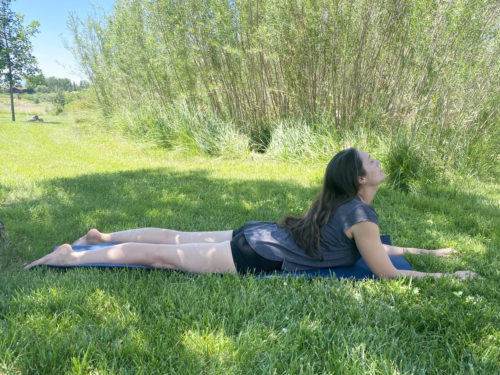
The sphinx pose is such a great relief for the lower back as well as the front of the neck. It’s inspired by the Great Sphinx in Egypt!
From table-top position, bring your belly down onto the ground.
Bring your forearms straight out in front of you and place them on the ground so that your elbow is about 2 inches in front of your shoulders.
Bring the palms to the earth and spread the fingers, the legs are flat on the ground behind you with the tops of the feet gently pushing into the floor.
Bring your chin up toward the sky, pushing the chest out in front of you, the head falling back behind you.
Release the belly into the floor, creating a stretch across the middle back.
Tips
If the sensation is too intense in the lower back, you can lower the head and just gaze forward. Hold this pose for 15 seconds.
Forward Fold
End this yoga sequence with one of the best Yoga moves for stiff neck.
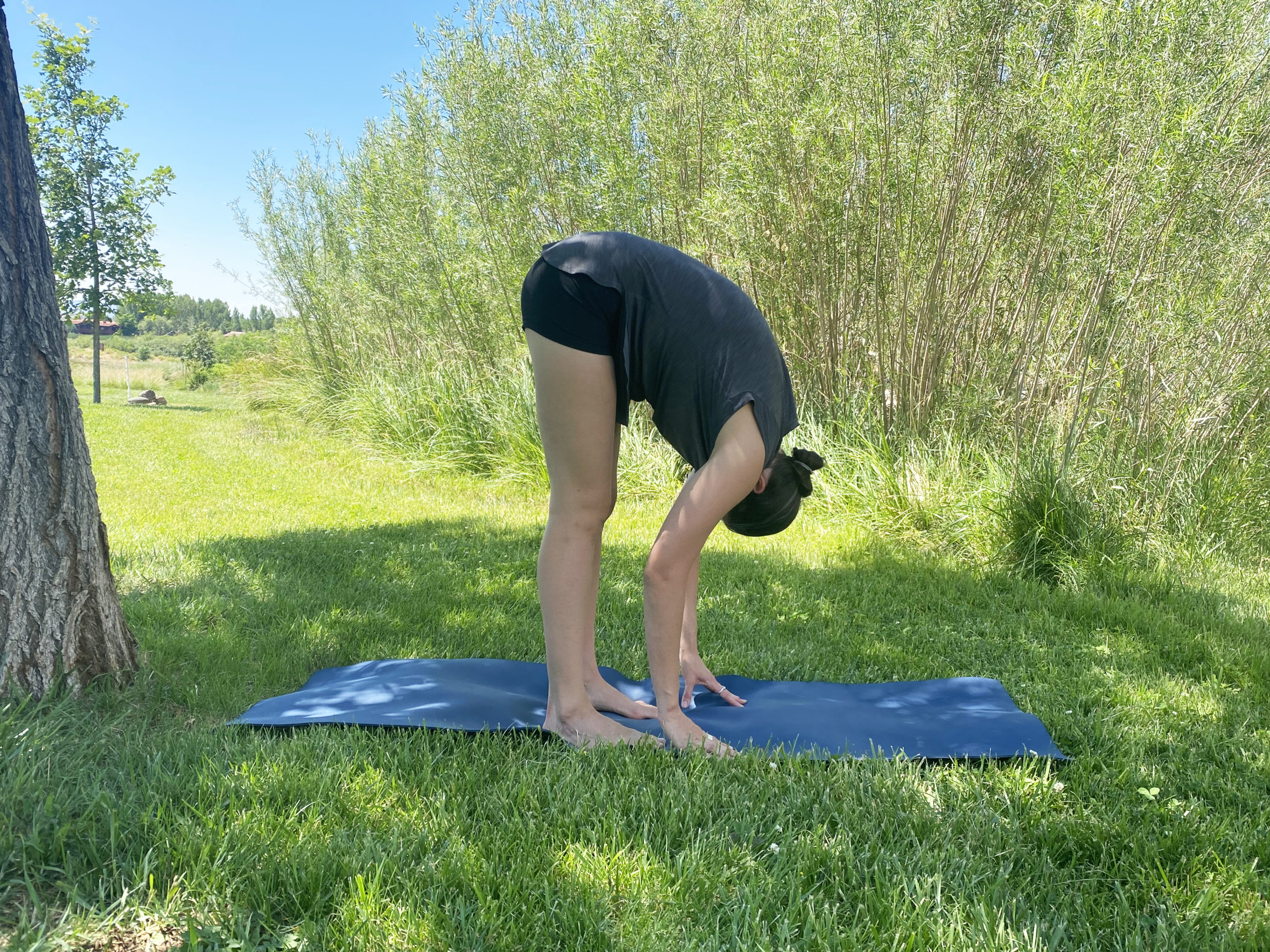
Start this pose by standing up straight and lengthening the spine as tall as you can up toward the ceiling, then putting a slight bend in the knees, dive your hands down toward the ground as far as they will go.
You can rest your hands on the floor or a pair of blocks. Let the head dangle like a rag doll, the weight of the skull will slowly let the spine stretch.
Try to bring your torso in towards the tops of the thighs as much as possible.
Tips
You can try grabbing onto either elbow and letting the head and spine sway from side to side. Hold this pose for at least 15 seconds.
Should I do yoga with a stiff neck?
A stiff neck can be caused by a variety of reasons. If you have a stiff or sore neck due to an injury, it’s best to wait until that injury has healed or get clearance from a doctor.
If you’re suffering from a sore neck due to posture, sitting at a desk all day, or sleeping in a weird position, these poses will definitely offer some relief. Moving the body and getting the blood flowing is a great way to release tension not just in the neck but anywhere in the body
What are your favorite poses for the neck? Share in the comment section below!
Grief is probably one of the most powerful human emotions, it’s hard to fit all its meaning into one word. At some point in our lives, we will all experience grief, it’s something that takes hold of us and we’ve just got to ride it out like a rollercoaster. Even though you may feel like breaking free or rising above the grief is impossible at the moment, there are quite a few techniques to help all of us move through this all-encompassing emotion more gracefully, and even see our way out of it to a better version of ourselves.
Here are a few steps to follow to let the process of grieving happen in the most elegant and comfortable way possible.
Know You Are Not Alone in Grief
No matter what kind of event has caused your grief, the first step is knowing that no matter what, you are not alone. Whether it be your dog, a parent, or a close friend, it’s a fact that others are also grieving with you, even though their relationship to the being you miss was different or not as close, they are in it with you.
More existentially, you are not alone as every human that has ever lived and ever will live has experienced grief, and guaranteed to a more severe degree than you. Knowing that grief and hardships are synonymous with being alive and being a human, makes it a bit easier to relate to reality in this difficult time.
Let it Sink In
The shock of grief can be great. The first reaction might be to run away or drown your grief with distractions or other unhealthy habits. The truth is though, you need this initial time to let it really sink it. Dive fully into the grief, because whether you believe it or not, it will pass. But you will never get this crucial time period back, you must face your grief, pain, and sadness head-on otherwise this emotion could manifest into other negative emotions or actions down the line.
Take the time to really let the grief wash over you, no matter how difficult, because if you don’t take this crucial time to acknowledge the facts, you will only have to do so later in life, realizing you should have taken the emotional power to deal with it when you had a chance.
Start to Write it All Down
A good starting point even before talking it out is starting with a journal, write all your emotions and thoughts, dreams, and ideas down relating to your grief. This will help you find meaning in the abstractness of life, it will help you form ideas and words about the event, about your grief, and how you actually feel about it. Try writing a letter to the person or being that you’ve lost, perhaps something you didn’t get to say before they left.
Write about how they impacted your life, write about the good and the bad, and get it all out. This should be a cathartic exercise. Writing will help you make sense of all the chaos you are currently feeling.
Share your Feelings Openly
After experimenting with writing down your feelings and ideas about the event, start to talk out loud about your pain and grief with a close friend or family member. It can’t be said more factually that speaking about your emotions whether they are grief or other is one of the most important things we can do as humans to cope with our emotions.
If you are more comfortable talking to a counselor or trained professional compared to a friend or colleague, then go for it. No matter what, make sure you talk it out. You don’t want those negative emotions and feelings becoming lodged within the energy of your being.
Dive into Yoga or other Physical Activity
The next step is to find some sort of activity that stimulates your connection to the divine, there is nothing more powerful than yoga! This is a special part of our lives where we are perhaps the closest we may get or feel to the spiritual realm. Take advantage of this time of healing by practicing yoga and meditation with intention.
Practice at home or with others in a studio. Feel the energy move through your body and try to expel the pain and fear you are holding inside your grief. Use your practice to cleanse yourself. We will always hold these people and things dear to us but there is no point to wallow in grief and pain for the rest of our days. We must overcome.
Stay Active and Get Back to your Regular Activities
Once we have traveled through the above steps, we have progressed quite far in the grieving process. Whenever you feel most ready, it’s a great time to return to our regular activities and schedule. This will give us a sense of purpose and restore or motivation for life. We must find our lives again, this will help us move on and find joy and happiness again in the things we love.
Acceptance
The final stage is acceptance. Knowing that there is nothing we can do to reverse time or fix the problem, we must accept the events that have come to pass with grace and positivity, we must not be overtaken by bitterness or a sour taste for life in general.
Of course, we will never forget those that we loved and cherished, we must find a new way to carry them with us into the future, in a beautiful and positive light no matter what. We must accept the past, and see the future as a new opportunity for growth and understanding. Going through a loss is probably one of the most powerful and transformational things we will encounter in our lives. In a way, we must feel lucky to be alive and experience it all, the beautiful and the ugly.
It’s no surprise that practicing yoga regularly comes with a bevy of benefits. You might think that practicing daily is true discipline and only for hard-core yogis, but daily practice is easier than it sounds even when you have a busy schedule. It will make your yoga practice that much more impactful. Read on to find out the 7 benefits of practicing yoga on a daily basis.
Practicing daily also doesn’t mean hitting the studio for a full class, a daily practice can consist of just a 10 to 15-minute session; a few minutes of meditation, stretching or even a few vinyasas, yes, that is a yoga practice. Some days can be more involved and others perhaps even simpler. This is all part of the path toward being a daily practitioner.
More Focus
Yoga encourages us to focus on our breath and our state of mind and body. Doing this simple practice daily can really strengthen this part of our being. We will be able to bring this focus more easily into our everyday life. While we are working on a project, solving an interpersonal issue, or even driving, we will be more focused.
Focus is important to get the most out of life. You’ll always hear focus “this” focus “that” throughout a traditional yoga class, this is bringing our attention from elsewhere to a single point. Most of us are going through our day without any focus at all, we are daydreaming for hours at a time, not really aware of our surroundings. With daily yoga practice, we can bring focus into our life easier and it can become a positive part of our day-to-day routines.
Best practice for focus: Start each class with a body scan, then a mind scan, and ask yourself “how am I feeling today?”
Increased Stamina
Yoga gives us the foundation we need for a healthy heart, immune system, and lean body which in turn lets us go throughout our days with more ease. No more getting winded from carrying groceries up the stairs or jogging to your car in the rain. Daily practice will keep you in tip-top shape.
A portion of yoga is non-moving and concentrates on the mind, but the rest of yoga is physical. That’s why having a daily practice can give you better stamina and give your heart the workout it needs daily. Yoga is phenomenal in helping with other sports and activities in our daily lives like picking up or taking care of children, running, sports, and even sex.
Best practice for increasing stamina: Add a few rigorous vinyasas to your class or several times a week trying to hit the 1-hour mark for practice.
Sense of Calm
Everyone knows yoga is really great for the mind. Anybody will tell you they are more chill and relaxed mentally after a good yoga class. This is because yoga brings forth the awareness and focus necessary to conquer our own fears and anxieties. Yoga is a tool to find peace and calm. Of course, it may take practice for some to be able to push all anxiousness aside, but anything is possible with practice.
People who practice daily are said to have more control over their own emotional state and furthermore are able to stay calm when things heat up. You may even become a leader where your peers will look up to your calm and serene demeanor as a method for truly dealing with the stresses of life.
Best practice for increasing calm: Start and end each daily class with a focused mantra, like saying “I am grateful for,” “the most positive thing in my life is,” “I am enough,” “I am love.”
More Structure and Routine
A lack of routine or sense of purpose in life can lead to increased anxiety and lack of motivation. Making space in your daily schedule for 15 minutes or an hour of yoga practice can create a solid foundation for success in your physical and mental realm.
It can be a morning session or perhaps it’s easier to practice in the evening when the house is calm and all the tasks are completed. Experiment for a few weeks to see what works best, because if it works for you and you find that you are enjoying one time over the other, you will be more likely to stick to a daily practice.
Best practice to stick to a schedule: Try not to be hard on yourself if you miss a day, don’t give up. Reward yourself by planning yoga before meals or before a shower.
Increased Immune System
Yogis have long touted the benefits of practicing yoga as a way to cleanse and strengthen the immune system. Yoga clears the lymphatic system, keeps the blood circulating into muscles that normally wouldn’t receive such energy, and gets the heart pumping.
It is also believed that practicing inversions can keep the immune system stay strong. Engaging in headstands, handstands, shoulder stands and even downward-facing dog daily might help you keep the colds at bay while it seems all of your friends are sick.
Best practices for a better immune system: Make sure to add some sort of inversion, twist, and deep stretch into each practice. Also, nothing is more important than a clean and balanced diet for a good immune system.
Being Part of a Community
Practicing yoga daily will open you up to a whole new community you didn’t know about. Even if you are practicing at home, there are YouTube channels and live streams where you can meet new people. Join a free class in the park and meet your neighbors. And of course, there’s your local studio where you can become a regular and get to know other yogi lovers.
Even if you prefer to do your own thing at your own home, you will be intrinsically connected to other yogis. When you meet a yogi, you and that person will instantly have a bond. You might find yourself more inclined to perhaps want to be a teacher or join worship to learn about a specific aspect of yoga. All of which will expose you to more like-minded people.
Best practice for garnering community: Make yourself part of the community by getting out there and meeting others through studio classes, workshops, free park classes, or yoga festivals.
More Self Confidence
Doing anything daily will give you more self-confidence. Yoga is one of those special activities which gives you a higher sense of self, allowing you to transcend the dark clouds that keep you from rising above. Woking daily through your practice on both your physical and mental self, you will automatically come to find more confidence and more self-esteem.
Body awareness comes with yoga practice and this awareness can be so crucial for growth in individuals who might have poor body image or are self-abusive. When you get on your mat, you face your demons head-on and can hide from them no more. Over time you learn how to easily overcome or cope with them in a more healthy manner.
Best practice for self-confidence: Practicing in a group can grow self-confidence, as well as starting each class with a positive mantra – “I am enough, I am magnificent,” and then flowing through that energy in your practice.
Now it’s time to get on your mat! I hope you are able to build a daily yoga practice from scratch. Sure it takes a bit of dedication and focus, but the benefits are huge and will set you up for a life of both physical and mental wellness.