Hosting a yoga retreat is one of the most exciting events that a yoga teacher can host. It can be a life-changing experience for both the participants and hosts; it’s like creating a beautiful package of yoga, travel, wellness, and mindfulness.
But, in a world filled with so many choices, getting the right people to join your retreat needs smart marketing. That is why you need to learn how to market a retreat so you can fill all open spaces and make a profit in your endeavors.
In this article, we will go over many proven techniques on how to market a retreat online or in your local community. Whether it be a yoga, wellness, or business retreat, you will hear some ideas you might not have thought of otherwise!
A yoga or wellness retreat is sometimes a life-changing experience for the participants. This is because it’s a unique opportunity to get out of your comfort zone and try new experiences you might not otherwise. There are all sorts of retreats available offering different kinds of yoga styles and various itineraries.
But overall a yoga or wellness retreat is an exciting adventure that includes a focus on self-care, physical well-being, mental health, adventure, and exploration of the self. The retreats often happen in peaceful places like mountains or beaches, far away from the noise of the city.
A typical daily schedule for a yoga retreat might go something like this:
Morning meditation or yoga practice
Breakfast
Group hike or adventure
Lunch
Quiet time/journal time
Evening yoga practice or workshop
Dinner
Optional evening activities like live music, walking, or bonfires.
People attending these retreats also get to enjoy nature walks and workshops about healthy living. They learn about eating nutritious foods, and the meals provided are made with fresh and healthy ingredients. One important aspect of these retreats is taking a break from phones and computers, allowing everyone to focus on themselves without distractions.
Additionally, there are relaxing treatments like massages and spa therapies to help participants unwind and feel rejuvenated. It’s like a combination of exercise, learning, and relaxation, all in one peaceful setting.
Popular destinations for yoga and wellness retreats are Costa Rica, Italy, Florida, India, and Mexico.
3 Basic Necessities of Hosting A Soldout Retreat (You Only Need One)
If you are ready to host your own yoga retreat, most likely you have been teaching yoga for a while and are comfortable leading people. Beware that hosting a yoga retreat or wellness retreat is a big responsibility. You will be responsible for the well-being of many people and in charge of organizing the entire event.
The reality is that really anyone who is willing to put in the time and effort to meticulously plan a retreat and execute it with attention to detail, will succeed.
There are basically 3 things you need in order to successfully host and sell out a yoga retreat. (Besides being an expert in your field and being comfortable leading people.) You should have at least one attribute or a mix of all three.
A large following online
A large following in person (at a local yoga studio for instance.)
A willingness to invest in advertising the retreat.
Not everyone will have all or even one of these attributes. For instance, a teacher who might not have a social media account may be able to sell out a retreat because they have a large following in person. Their studio classes are consistently booked out and are able to leverage their reputation to sell out the retreat.
I worked at a retreat venue for almost a decade and I saw all three of these examples play out. I noticed the people with the largest social media following had the most participants in their retreat. Those hosts who were not active online had sold-out retreats but they were much smaller and intimate.
The commonality with each of these scenarios is that marketing both online and in-person will help sell all available positions in the retreat. Let’s find out more about how to market a retreat below.
How To Market A Retreat Online
Learning how tomarket a retreat on the internet is crucial in today’s digital age because it allows retreat organizers to reach a vast and diverse audience worldwide. The internet provides a powerful platform to showcase the unique aspects of the retreat, including its location, activities, and benefits.
By leveraging social media, websites, and online advertising, retreat organizers can create engaging content that captures the attention of potential participants. Moreover, online marketing enables direct interaction with the target audience, allowing organizers to answer questions and build a sense of community.
The internet’s global reach not only increases the retreat’s visibility but also enhances its accessibility, making it possible for yoga enthusiasts from different corners of the world to discover and participate in the retreat experience.
Build A Slick Retreat Website
First and foremost, you should have a place online where people can read all about your retreat and see pictures of the location. You can build a dedicated website or make a separate page on your existing website.
It’s not just a place to showcase your retreat; it’s a digital space that represents your retreat’s essence, values, and uniqueness. Having a well-designed website makes your event look trustworthy and legitimate. It’s also a great way for people to know exactly how to communicate with you, via whatever contact options you put on the site.
On your website, you should provide essential information like retreat details, schedules, accommodation, activities,previous testimonials if you have them, and pricing, creating a clear picture for potential attendees. Having as much info as possible will also filter out people who might not be the right person for your retreat.
Lastly, a website allows you to implement online booking and payment systems. This convenience simplifies the registration process for attendees, making it easier for them to secure their spots. It also helps you keep track of registrations, making the management of your retreat more organized and efficient.
Make sure to utilize SEO so that people can find you on the web. Optimize your website for search engines to improve its visibility in search results. Research relevant keywords related to yoga retreats and integrate them naturally into your website content. Focus on local SEO if your retreat is location-specific.
Without a professional website, you might miss out on connecting with those who are genuinely interested, making it a crucial tool to make your retreat dreams a reality.
Here’s a rundown of what should be on your retreat website or webpage:
As many details about the retreat as possible: location, schedule, travel suggestions, accommodation details, available activities and more
An in-depth bio section about all the hosts(this builds trust!)
High-quality pictures of the location and the hosts in action
Contact informationand links to the hosts’ social media accounts
Testimonials
Detailed pricing breakdown
Booking or payment system
Proper SEO
*Note that you can avoid making a separate website by creating a listing on a retreat directory website, but they will collect a portion of your profits.
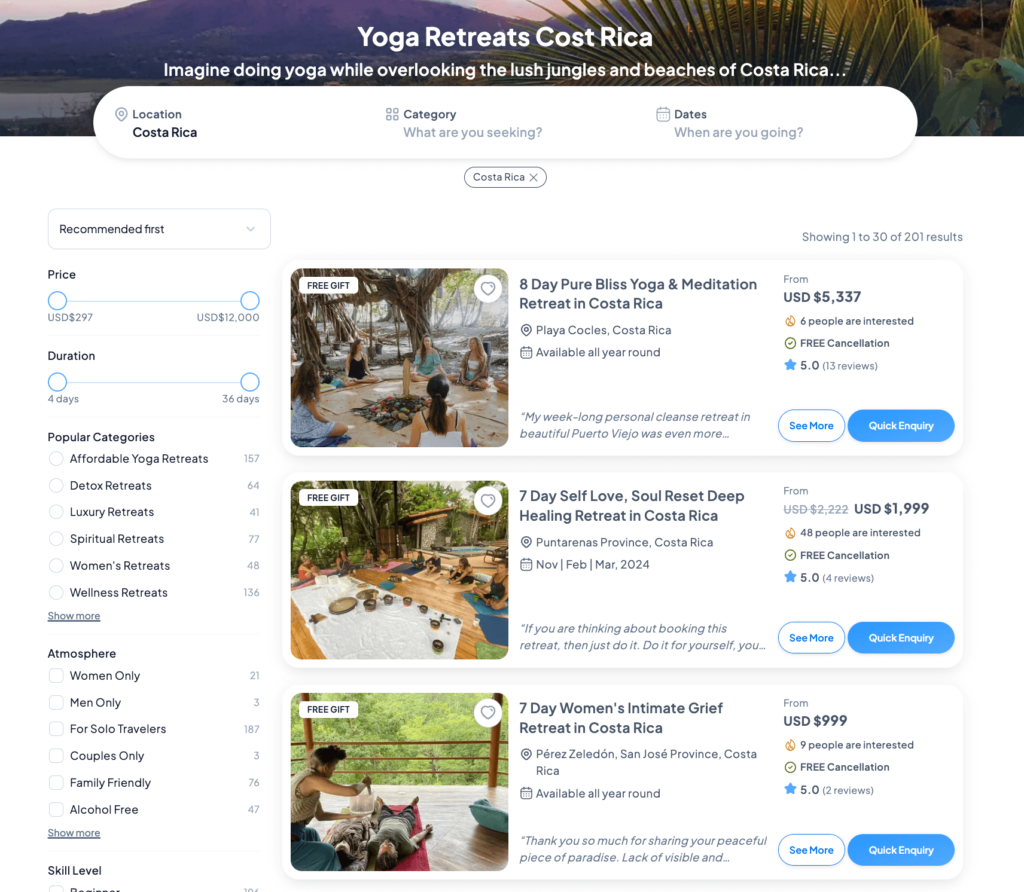
List Your Retreat On Popular Online Retreat Directories
This might be a good option for you if you do not have any social media presence or website. There are several retreat listing websites that do a lot of the work for you. For listing your retreat and bringing you traffic, they usually collect a portion of your profits or a flat fee.
Here are some benefits of listing on a directory to consider.
More Visibility: Listing on popular retreat websites means more people see your retreat.
Builds Trust: Being on a recognized site makes your retreat look reliable and trustworthy.
Reaches Targeted Audience: These sites attract people interested in yoga and wellness, your ideal audience.
Increased Exposure: The websites often help promote the retreats they list, giving you more visibility.
Easy Booking: Attendees can easily book their retreat through these sites, making the process smooth for everyone.
Positive Reviews: Happy attendees can leave good reviews, attracting more people to join your retreat.
Improved Search Visibility: These websites often appear high in search results, helping more people find your retreat online.
Saves Time and Effort: You don’t have to create your own website from scratch, saving you time and effort.
Effective Marketing: It’s an easier and more effective way to get more participants for your retreat, allowing you to focus on organizing a great event.
Here is a list of respected retreat directory websites that receive a lot of traffic.
Before choosing a platform, make sure to research its terms, fees, and user reviews to find the one that best suits your needs and budget.
Retreat Guru: Retreat Guru is specifically designed for yoga and wellness retreats.
BookRetreats: BookRetreats offers a wide range of yoga retreats, wellness retreats, and teacher training programs.
Yoga Alliance: If you’re a registered yoga teacher with Yoga Alliance (which is well-respected in the yoga community,) you can list your retreats on their website.
Yovada: Yovada is a yoga and wellness online booking platform that allows you to list retreats and workshops.
WeTravel: WeTravel is a booking and payment platform specifically designed for yoga retreats, wellness trips, and teacher training programs.
Retreatify: Retreatify is a platform that helps organizers list and promote their retreats.
Retreat Finder: Directory for all sorts of wellness retreats across the world.
Listing your retreat on popular retreat directory websites is an efficient way to quickly market your retreat. They will handle the entire booking process for a fee.
Promote Your Retreat Via Social Media
Who isn’t on social media these days? By utilizing popular social media platforms like Instagram, TikTok, Facebook, Twitter, and Pinterest to showcase your retreat, you will connect with people who are genuinely interested in your style of retreat. This is definitely one of the best ways on how to market a retreat.
Regularly post visually appealing content, such as yoga poses, retreat location highlights, participant testimonials, and behind-the-scenes glimpses. Engage with your audience by responding to comments and messages promptly.
Marketing your yoga retreat through social media is like sharing your exciting adventure with friends but on a bigger scale. Here are some easy ways to do it:
Create Engaging Content
Share beautiful pictures and videos of the retreat location, yoga sessions, and happy participants. Visuals help people imagine the experience.
Use Hashtags
Include popular yoga-related hashtags (#YogaRetreat, #WellnessJourney) to reach a wider audience interested in yoga and wellness.
Share Participant Stories
Post testimonials or stories from past attendees. Real experiences create trust and excitement among potential participants.
Host Live Sessions
Go live to give a sneak peek of your retreat preparations, conduct a mini yoga session., or a live Q&A. You could also share the location of the retreat.
Collaborate with Influencers
Partner with yoga influencers who can promote your retreat to their followers. Their endorsement can reach a larger audience.
Run Contest
Organize fun contests related to yoga or wellness. Encourage participants to share your retreat information to enter, increasing your visibility.
Consistently Post
Post updates about the retreat countdown, special workshops, or guest teachers. Regular posts keep your event fresh in people’s minds.
Use Different Platforms
Don’t limit yourself to one platform. Utilize Instagram, Facebook, Twitter, and even Pinterest to diversify your reach.
Engage with Your Audience
Respond to comments, messages, and shares as quickly as you can. Engaging with your audience makes them feel valued and more likely to attend.
Remember, social media is about connecting and sharing. Be genuine, and show your passion, and your retreat will attract participants who share your enthusiasm for yoga and wellness.
Use Email Marketing Campaigns To Promote Your Retreat
Email marketing is one of the most powerful ways to market because whoever you might have on your email list is already interested in what you’re doing. You should already have an email list from your website, your yoga studio, live events you have held in your community, or collecting them from social media. (If you don’t have a list, start creating one now!)
If you have a list to use, send out targeted email campaigns with information about your retreat, early bird offers, and exclusive discounts. Personalize your emails and include visually appealing graphics to capture attention.
You can use popular email marketing platforms like Mailchimp or Constant Contact. These tools make creating professional-looking emails and managing mailing lists super easy.
Make sure to share details about the retreat, such as the location, activities, and benefits. Including vibrant visuals, like photos of past retreats or picturesque retreat locations, can make the emails more engaging.
Secondly, organizers can schedule a series of emails leading up to the event. They can start with an introductory email, highlighting what makes the retreat special and how it can benefit the participants. Follow-up emails can include testimonials from past attendees, information about the instructors, and any special offers or discounts.
Organizers can also create a sense of urgency by including limited-time offers or early bird discounts, encouraging recipients to register promptly. Including clear calls-to-action, such as “Register Now” buttons, makes it easy for more participants to sign up for the retreat.
Paid Advertising can be an affordable way to advertise your retreat to a targeted audience online. Ads through Instagram and Facebook are particularly effective and you can set up a daily or weekly budget. Paid advertising can generate immediate visibility and website traffic.
Paid advertising is great because businesses can target these ads to specific groups based on age, interests, and more, making sure the right people see them.
When making these ads, focus on making them professional. Use clear and compelling copy, high-quality images, and a strong call to action. You can send people directly to your website to book or to message you. There are several options you can choose to see what works best for your event.
Another trick is using retargeting ads. These ads target people who have visited a website before, reminding them about the product.
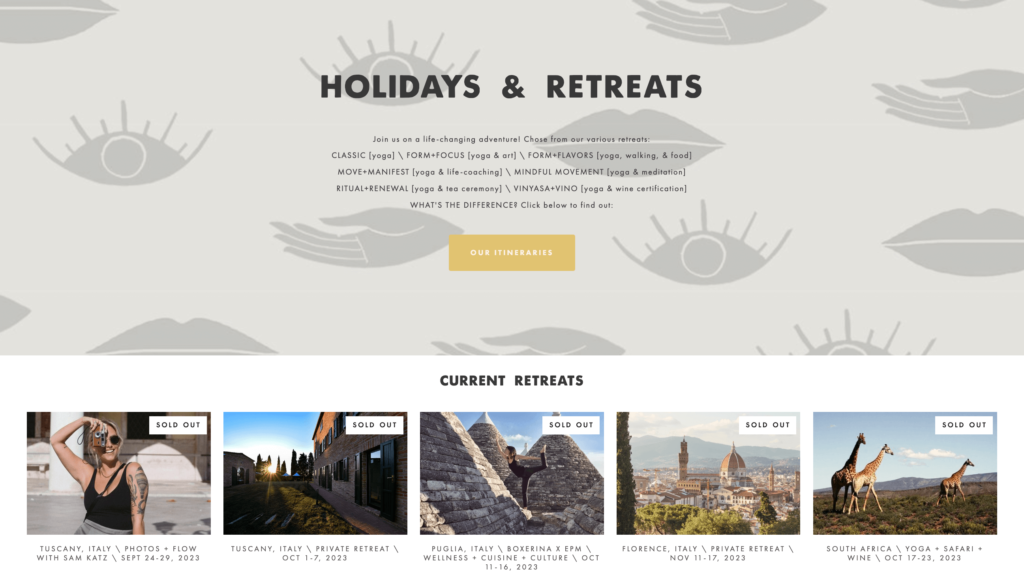
While organizing and planning out your retreat, research some of the best in the industry to try and understand what they are doing to achieve such success. No point in reinventing the wheel!
Follow some of the biggest influencers in your niche on all relevant platforms and study how they are advertising their events. Take notes or screenshots of anything you would be interested in using for your marketing strategy.
Google search for “retreat + location” to see what some of the highest-ranking retreat websites look like and emulate their design.
Make sure to sign up for several email newsletters from the best in the field to experience a successful email marketing funnel. This sort of research can be invaluable in your own efforts to market your retreat.
At the time of writing, eatpraymove was completely sold of all their retreats. This would be an ideal candidate for marketing research.
More Creative Ways To Market Your Yoga Retreat Online
Virtual Reality (VR) or 360° Videos
Offer virtual reality tours or 360° videos of your retreat location. This immersive experience creates excitement and allows potential attendees to create a strong connection before they even arrive
Interactive Webinars and Live Workshops
Host live webinars or workshops on wellness topics relevant to your retreat theme. Invite experts to speak and engage the audience in real-time discussions. This interactive approach builds credibility and interest among participants.
Wellness Blog/Vlog Series
Start a blog or vlog series focusing on wellness topics. Share healthy recipes, mindfulness practices, fitness routines, and wellness tips. Regularly publishing valuable content establishes your expertise and attracts organic traffic to your website.
Collaborate with Wellness Influencers
Partner with wellness influencers or bloggers who align with your retreat’s values. Ask them to share their experiences and promote your event to their followers. Influencers’ authentic endorsements can create a buzz around your retreat.
Mindfulness and Meditation Apps
Collaborate with mindfulness or meditation apps to create guided meditation sessions or wellness challenges related to your retreat. These apps often have a wide user base interested in wellness activities.
Podcast Sponsorships
Sponsor or guest star on podcasts related to wellness, travel, or self-improvement. Sharing your expertise and talking about your retreat can reach a new and engaged audience interested in wellness activities.
User-Generated Content Contests
Organize a contest encouraging participants to share their wellness journey. Offer prizes like discounts or exclusive sessions for the most inspiring entries.
Collaborative Online Events
Partner with wellness brands or practitioners for joint online events. It could be a joint yoga session, a cooking workshop, or a wellness panel discussion.
Tailor your marketing efforts to resonate with your target audience, and focus on providing value and inspiration. Engaging, genuine content will capture the interest of potential participants and create a strong community around your wellness retreat.
Marketing a yoga retreat at your local studio involves leveraging your existing community and creating a buzz among your students. Here are some effective strategies to market your yoga retreat at your local studio:
Create Visual Promotions
Design eye-catching posters, flyers, and banners promoting your yoga retreat. Display these materials prominently within your studio to catch the attention of your students. You can use a website like Canva to create professional images for free.
Announce in Classes
Personally announce the retreat at the beginning or end of your yoga classes. Share your enthusiasm about the retreat and explain its unique features. Encourage students to ask questions and express interest.
Offer Special Discounts to Studio Members
Provide exclusive discounts to your studio members. This incentive rewards their loyalty and encourages them to join the retreat. Make sure to clearly communicate the special pricing available only to studio members.
Host Information Sessions
Organize informational sessions or Q&A sessions about the retreat. Invite interested students to learn more about the retreat, the destination, and the activities planned. Use these sessions to address concerns and build excitement.
Create a Retreat Display Area
Dedicate a corner of your studio to showcase details about the retreat. Set up a visually appealing display with pictures, itinerary, and testimonials from past retreats.
Leverage Social Media
Use your studio’s social media channels to promote the retreat. Share regular posts, photos, and videos related to the retreat theme. Encourage your students to share these posts with their networks, increasing the reach of your promotional efforts.
Offer a Referral Program
Create a referral program where current students can earn discounts or free classes for every new participant they refer to the retreat.
Collaborate with Studio Instructors
Engage other instructors in your studio to promote the retreat. Ask them to mention it in their classes and share their excitement about the experience. Having multiple instructors endorsing the retreat can create a stronger impact.
Host a Retreat Kick-off Event
Organize a small event or party at your studio to officially launch the retreat. Offer a free yoga class, provide healthy snacks, and share details about the retreat. This event can create a sense of community and excitement among your students.
Follow Up Personally
After announcing the retreat, follow up personally with students who have shown interest. Answer their questions, address concerns, and provide additional information as needed. Personalized communication can make a significant difference.
The people at your local studio will most likely be your best customers, so your genuine passion for the retreat will naturally inspire others to join. By creating a sense of community, offering special perks, and engaging with your students personally, you can effectively market your yoga retreat at your local studio.
How To Market Your Yoga Retreat In Your Local Community
Marketing a yoga retreat in person or within your local community involves building personal connections, leveraging local resources, and creating a sense of community. Here are some effective strategies to market your yoga retreat locally:
Partner with Local Yoga Studios
Collaborate with nearby yoga studios to promote your retreat. Offer to conduct a free workshop or class at the studio to showcase your teaching style. Provide flyers and information about your retreat to interested participants after the class.
Host Free Community Events
Organize free yoga sessions, meditation workshops, or wellness events in local parks or community centers. Use these events to promote your retreat and connect with potential participants face-to-face.
Attend Local Events and Markets
Set up a booth or a table at local events, farmers’ markets, or wellness fairs. Distribute flyers, business cards, and promotional materials about your retreat.
Collaborate with Local Businesses
Partner with local businesses, such as health food stores, cafes, or spas, to cross-promote your retreat. Display your flyers and brochures in their establishments, and in return, promote their services to your retreat participants.
Offer Early Bird Discounts to Locals
Provide special discounts or exclusive offers to local residents. Advertise these discounts through local newspapers, community bulletin boards, and social media.
Engage with Local Social Media Groups
Post to social media groups or pages dedicated to yoga and wellness in your local area. Use these platforms to share valuable content, promote your retreat, and engage with community members.
Collaborate with Local Influencers
Partner with local wellness influencers or fitness trainers. They can endorse your retreat to their existing students and followers. Consider offering them a complimentary spot at your retreat in exchange for promotion.
Organize Workshops and Mini-Retreats
Host workshops or mini-retreats in your local area. These shorter events can serve as a teaser for your main retreat, allowing participants to experience your teaching style and approach. Make sure to collect contact information for potential attendees.
Utilize Community Centers and Libraries
Check if your local community centers, libraries, or religious institutions allow you to host informational sessions about yoga and wellness. Use these sessions to talk about the benefits of yoga and introduce your upcoming retreat.
Engage in Local Sponsorships
Sponsor local sports events, charity runs, or community fundraisers. Your retreat’s name and logo can be displayed prominently at these events, increasing your local visibility and credibility.
Creating more opportunities for in-person interactions is invaluable. Building relationships within your community can lead to word-of-mouth referrals and create a positive reputation for your retreat offerings.
Hire A Marketing Or PR Company To Market Your Retreat For You
If you are not interested in marketing your retreat at all and have enough room in your budget you can hire a company to do the marketing for you. A reputable marketing or PR company will definitely know how to market a retreat for success.
Be sure to choose a company with good reviews and with great customer support. Be sure to be clear about what your goals and budget are.
These companies can help you navigate paid advertising online and also in print like magazines and periodicals. They can also manage your social media and some companies may be able to create you a custom website. The only downside of this route is that it will take a significant portion of your (ungaranteed) profits.
What If I Don’t Fill All The Spots In My Retreat?
It’s not easy trying to figure out how to market a retreat, and if it’s your first time doing so, you might not be able to fill all your spots. The best way to protect yourself is to choose the lowest minimum amount of customers needed to go through with the retreat. Make that very clear in your policy that if that number is not reached, you will cancel the retreat.
Canceling is definitely the worst-case scenario and the last resort, but if you must, make sure to give participants enough of a heads-up so they can cancel or change travel plans. At least a month (more if it’s international) is appropriate.
Canceling your retreat is not good for your reputation or the image of your business, so spend time and effort learning how to market a retreat effectively so that you don’t need to make this devastating call.
If you follow all the info in this blog on how to market a retreat, your retreat will be sure to sell out and be a success! Best of luck 🙏
Our modern lives are more hectic than ever, and sometimes the overwhelm can have negative effects on our body and mind. That’s why more and more people are curious about trying meditation for the first time, thanks to its long list of benefits.
If you are yearning for inner peace and serenity meditation might be the answer you’ve been searching for. Meditation is a very simple practice rooted in ancient traditions that offers many benefits for the mind, body, and soul. Mediation has been scientifically proven to reduce stress and anxiety, enhance focus and clarity, and create a better mind-body connection.
However, starting your meditation journey can be daunting without proper guidance. In this article, we will explore the key tips to help beginners experience meditation for the first time and embrace tranquility like never before.
Let’s go over all the essentials to ensure a rewarding and fulfilling meditation experience.
Meditation is not just a trendy wellness buzzword; it’s a practice with a rich history and many proven benefits. Research shows, regular meditation can improve mental and physical health in various ways.
Meditation is based on focusing on the present moment and letting go of racing thoughts. Over time this can help us calm down when we get anxious in the future.
Meditation also enhances emotional well-being. Regular practice can increase self-awareness andemotional resilience. This allows practitioners to more easily cope with life’s ups and downs.
Meditation can also improve cognitive function, including concentration, memory, and creativity. Meditation helps sharpen mental clarity and enhance productivity by training the mind to stay focused.
In addition to these mental and emotional benefits, meditation also has physical advantages. Studies have shown that meditation can lower blood pressure, reduce inflammation, and boost immunity. Regular practice can also improve sleep quality,
Incorporate meditation into your daily routine to experience these transformative effects.
What It Means To Meditate
Before diving into meditation, it’s essential to understand its purpose and what it means to actually meditate. At its core, meditation is a practice that involves training the mind to focus and redirect thoughts. It’s a means of cultivating mindfulness and developing a heightened sense of self-awareness.
Contrary to popular belief, meditation is not about “emptying the mind” or achieving a completely blank mind. Instead, meditators learn to observe thoughts and emotions without judgment. Then let them pass without attachment.
The goal is to develop a non-reactive and non-judgmental attitude toward one’s thoughts and experiences. The practice of non-reactiveness can greatly help one stay calm in stressful situations in the future.
There are many different meditation techniques available to try. Each technique is unique in its own way, but they all share the common goal of quieting the mind and cultivating a sense of inner peace and stillness. A state of meditation can even be achieved while walking, which is a type of moving meditation.
On this new path to meditation, keep an open mind and try out different techniques to find what resonates with you. What works for one person may not work for you there is no one-size-fits-all approach to meditation. Experiment with different techniques and find the one that suits you the best.
Setting Up Your Meditation Space
Creating a dedicated space for your mediation practice can help you stay consistent and give importance to your practice. While it’s not necessary to have a large or elaborate space, having a designated area can help signal to your mind that it’s time for meditation.
Choose a quiet and peaceful corner of your home where you can sit undisturbed for the duration of your practice. Ideally, the space should be free from clutter and distractions. You can enhance the ambiance by adding elements that promote relaxation, such as candles, incense, or calming artwork.
Invest in a comfortable meditation cushion or chair to support your posture during meditation, maintaining an upright yet relaxed posture is crucial for optimal breath flow and focus. If sitting on the floor is uncomfortable, you can also meditate on a chair with your feet grounded.
Your meditation space doesn’t have to be perfect (you can practice on top of your bed, or even sitting up against a wall!) What matters most is that it feels inviting and helps you achieve a sense of calm.
A meditation cushion is a special type of pillow for the floor that is used exclusively for meditating. It helps elevate the hips and makes sitting on the ground more comfortable.
Breathing Techniques During Meditation For The First Time
You hear it all the time, “Just breathe!,” or “Take a breath.” The power of this phrase cannot be understated, utilizing the breath to calm our body and mind is incredibly powerful and has been proven. So, it goes without saying that the breath is a fundamental anchor in meditation.
Whether it’s during meditation or in our everyday lives, the breath serves as a focal point to bring the mind into the present moment. By paying attention to your breath, you can train your mind to stay focused and centered.
Deep Belly Breathing
One of the simplest and most effective breathing techniques for meditation is deep belly breathing. Start by finding a comfortable seated position, either on a cushion or a chair. Close your eyes and take a few deep breaths, allowing your abdomen to expand as you inhale and contract as you exhale.
As you continue to breathe deeply, focus your attention on the sensation of your breath entering and leaving your body. Notice the rise and fall of your abdomen with each breath. If your mind begins to wander, gently bring your attention back to your breath without judgment or frustration.
4-7-8 Breath
Another popular breathing technique in meditation is the 4-7-8 breath. This technique involves inhaling for a count of four, holding the breath for a count of seven, and exhaling for a count of eight. Repeat this pattern several times, allowing your breath to guide you into a state of deep relaxation.
Box Breathing Or Counting Breath
An even more straightforward technique is to just simply count to 4 with each inhale and exhale; inhale for 4 seconds, then exhale for 4 seconds.
This will help you stay focused and let any thoughts that may arise be easily quieted. Once you get a rhythm and are really tuned into your breath, you can slowly drop the counting. At any point, if you feel the thoughts begin to take over again, return to counting the breaths.
As you become more comfortable with meditating, you can try more complicated breathing techniques like, ujjayi breath or Nadi Shodhana. You can also add mantras that can be said internally or out loud. Even further, you can simultaneously use mudras, which are certain ways of holding your hands and fingers to activate energies within and without the body.
Experiment with different breathing techniques and find the one that resonates with you. Know that the breath is an important part of the meditation practice and can be used as a tool to take you deeper into your practice. Even better, it is ALWAYS available to use!
Finding The Right Meditation Technique For You
With countless meditation techniques available, it can be overwhelming to know where to start. The key is to find a technique that resonates with you and aligns with your goals and preferences.
For beginners, it’s best to start with something simple like mindfulness meditation. Here are a few popular meditation techniques to explore:
Mindfulness Meditation
This technique involves focusing your attention on the present moment and observing your thoughts and sensations without judgment. It cultivates a sense of non-reactivity and allows you to develop a deep understanding of your mind.
Loving-Kindness Meditation
Also known as Metta meditation, this technique involves directing loving-kindness and compassion towards yourself and others. It helps cultivate a sense of empathy and connection with all beings.
Transcendental Meditation
The Transcendental Meditation technique involves the use of a mantra, a word or phrase repeated silently, to facilitate a state of deep relaxation and transcendence. It is often practiced for 20 minutes, twice a day.
Guided Meditation
This technique involves following a recorded or live guided meditation, where a teacher or instructor leads you through the meditation process. It can be helpful for beginners who may find it challenging to stay focused on their own.
Meditation is a personal practice, and what works for one person may not work for another. Explore these techniques and find the one that resonates with you. Trust your intuition and allow yourself to find the technique that feels most authentic and beneficial to you.
Tips For Staying Focused During Meditation
Staying focused during meditation can be challenging, especially if it’s your first time meditating. The mind has a natural tendency to wander, and it’s normal to experience a stream of thoughts during your practice. However, with patience and practice, you can train your mind to stay focused and present.
Here are some tips to help you stay centered during meditation:
Set An Intention
Before beginning your meditation, take a moment to set an intention or a purpose for your practice. It could be as simple as cultivating inner peace or developing mindfulness. Having a clear intention can help anchor your focus and give you motivation to practice.
Start With Short Sessions
If you’re new to meditation, it’s helpful to start with short sessions and gradually increase the duration as you build your practice. Starting with just five or ten minutes can make meditation more approachable and set you up for success.
Use Guided Meditations
The internet and apps are filled with tons of free guided meditations which can be a helpful tool especially for beginners. They provide verbal instructions and guidance, helping you stay focused and navigate through different aspects of the practice.
Gently Redirect Your Attention
When your mind starts to wander, gently redirect your attention back to your breath or chosen focal point. Avoid getting caught up in frustration or self-judgment. Instead, acknowledge the distraction and gently guide your focus back to the present moment. It gets easier with practice.
Cultivate Self-compassion
Meditation is a practice of self-compassion and non-judgment. Be kind and patient with yourself as you navigate through the challenges of staying focused.
For the lucky ones, meditation is a lifelong journey, and each session is an opportunity for growth and self-discovery. Embrace the process and trust that with consistent practice, your ability to stay focused will improve.
Advancing your meditation practice can make one capable of staying calm in stressful situations.
Dealing With Common Challenges And Distractions
At first, it can seem almost impossible to “quiet the mind,” like seriously, besides meditation when has anyone really tried to quiet their thoughts? It’s during meditation when you bring all your focus inward, then you realize how much dialogue is happening inside your head.
Meditation, like any practice, comes with its own set of challenges and beginners should not be discouraged. During your first meditation session, you might feel intimidated by the idea of trying to make all your thoughts just simply disappear. But the truth is that we are not trying to make our thoughts disappear, we just want our minds to be more peaceful and to not allow our psyche to attach to each passing thought. Trust the process and know it will get easier.
Here are some common challenges and tips for dealing with them:
Restlessness
It’s common to experience restlessness or discomfort during meditation, especially if you’re new to the practice. If you find it challenging to sit still for an extended period, try incorporating gentle movement into your practice, such as walking meditation or yoga.
Monkey Mind
The mind tends to jump from one thought to another, often referred to as the “monkey mind.” If you find your thoughts racing, try visualizing your thoughts as clouds passing by or leaves floating down a stream. This visualization can help create distance and detachment from the thoughts.
Impatience
It’s natural to want immediate results from your meditation practice, but meditation is a gradual process that requires patience and consistency. Trust that with time, you will experience the transformative effects of meditation.
External Distractions
External distractions like noise or interruptions can easily ruin your meditation practice. If you’re meditating at home, try using earplugs or playing soft, soothing music to drown out external sounds.
If possible, let your family or roommates know you are about to meditate so they can help you in your journey. Also know that with time, you will become less bothered by distractions as you get better at meditating and maintaining focus.
Inconsistent Practice
Consistency is key to getting all the benefits out of meditation. Establish a regular meditation routine that works for you, whether it’s daily, a few times a week, or a specific time of day. Treat your meditation practice as a non-negotiable appointment with yourself and put it on your calendar or to-do list. Try setting a daily alarm just for your meditation practice.
By addressing these common challenges and finding strategies to overcome them, you can maintain a consistent and fulfilling meditation practice. Meditation is a journey of self-discovery, and every challenge is an opportunity for growth and deepening your practice.
Incorporating Meditation Into Your Daily Routine
To fully experience the benefits of meditation, you need to practice, practice, practice. And yes, that may be easier said than done, but like any other routine, once you “get in the groove,” it’s a lot easier to continue.
Here are some tips for seamlessly integrating meditation into your daily life:
Set A Regular Time
Choose a specific time of day that works best for you and dedicate it to your meditation practice. It could be early morning, during a lunch break, or before bedtime. By establishing a regular time, you create a habit and make it easier to stick to your practice.
Start Small
If you’re new to meditation or have a busy schedule, start with shorter sessions, such as five or ten minutes. It’s better to have a short and consistent practice than to skip it altogether because of time constraints.
Create Reminders
Set reminders or alarms on your phone or use meditation apps that offer reminders. These reminders can help you stay accountable and remember to take time for your meditation practice.
Join A Community
Join a meditation class at your local yoga studio. You can also search for meditation events in your area. Sharing your experiences and challenges with like-minded individuals can provide support and encouragement on your meditation journey.
Be Flexible
While having a consistent routine is beneficial, it’s also important to be flexible. If you’re unable to meditate at your usual time, find another time during the day to squeeze in a quick meditation session.
By incorporating meditation into your daily routine, you make it a priority and create space for self-care and introspection. Soon you will be a meditation guru!
How Long Does It Take To Get Good At Meditation
Meditation does not come easy for anyone, Buddhist Monks practice meditation practically their entire lives and still strive for more tranquility. Because that’s just the point, it’s called a “practice” because you can never master it, you just keep trying to get a little bit better or a little bit deeper every time.
The truth is that you are going to be “good” at meditation on your very first try because bringing your awareness inward and attempting to quiet your mind is the main objective of meditation. And with each practice, it will get easier to quiet the mind and tune into your center.
On my personal journey, I started by meditating for only 5 minutes at a time, I just could not sit for longer than that. Slowly I started to transition to 10 minutes by focusing on my breath, and using mantras internally. A meditation practice that was at least 15 minutes or longer is when I would really start to dive into a very deep state of bliss.
Most practitioners of meditation are able to achieve a deep relaxed state quickly in their practice in only a matter of months (with consistent dedication,) or up to a year.
Some meditators claim to hallucinate or enter other realms when they sit and meditate for longer periods of time. Everyone is different and all that matters is that you will immediately start feeling the benefits of meditation once you start your practice.
Resources For Guided Meditation And Mindfulness Apps
In today’s digital age there are so many resources available to support your meditation practice. Whether you prefer guided meditations or mindfulness apps, these resources give guidance and inspiration.
This popular mindfulness app offers guided meditations, sleep sounds, and courses on various topics, including stress reduction and focus improvement. They offer both free and paid plans.
Calm is another popular app that provides guided meditations, sleep stories, and soothing sounds to help you relax and unwind. They offer both free and paid plans.
Insight Timer is a meditation app with a vast library of guided meditations, music tracks, and talks from leading meditation teachers and mindfulness experts.
4. YouTube
YouTube is a treasure trove of meditation resources. You can find guided meditations, meditation music, and instructional videos from unlimited meditation teachers.
5. Meditation Retreats And Workshops
Consider attending meditation retreats or workshops to deepen your practice and learn from experienced teachers. These unique experiences can provide a supportive environment for growth and self-discovery.
Explore these resources and find the ones that resonate with you. Remember, these resources are tools to support your practice, but the real work happens when you commit to showing up for yourself and dedicating time to your meditation practice.
Conclusion: Embracing Tranquility Through Meditation
Trying out meditation for the first time is the beginning of a beautiful and fruitful journey, one that will offer a pathway to inner peace and tranquility. By following these beginner’s tips, you will easily find a meditation routine that you can fit into your daily life.
So get out your meditation cushion and don’t hesitate to try meditation for the first time!
Everyone who practices yoga knows how life-changing these practices can be. That said, giving the gift of yoga or meditation is a powerful one to share with those struggling.
If you’re looking to donate to an organization that is spreading yoga and positive spirituality in the world, you must read this blog first.
“As we work to create light for others, we naturally light our own way.
There are countless organizations that are helping people heal and find their true selves. This list of the best yoga charities and non-profit yoga organizations bringing yoga to veterans, incarcerated individuals, and other vulnerable communities.
Below you’ll find a list of the best yoga yoga charities and what each of them is about. Make sure to read all the way through so you are making the right decision with your money.
Veterans, active-duty members, and their families can also access free daily online classes.
All VYP classes are taught by graduates of their teaching training program. Their VYP Teachers are trained specifically to work with veterans who may be suffering from PTSD. Many previous VYP students have returned as teachers to share what they have learned with other veterans.
When founder Dr. Daniel J. Libby patient’s practiced yoga or meditation, he noticed their PTSD symptoms improved. Many of VYP’s students are in awe that something as simple as breathing and meditation can help heal their PTSD.
Another veteran-focused non-profit to check out is Come Back Yoga.
The founder Dr. Daniel J. Libby, realized that some of his patients had positive experiences managing their symptoms of PTSD when they practiced yoga or meditation.
Prison Yoga Project
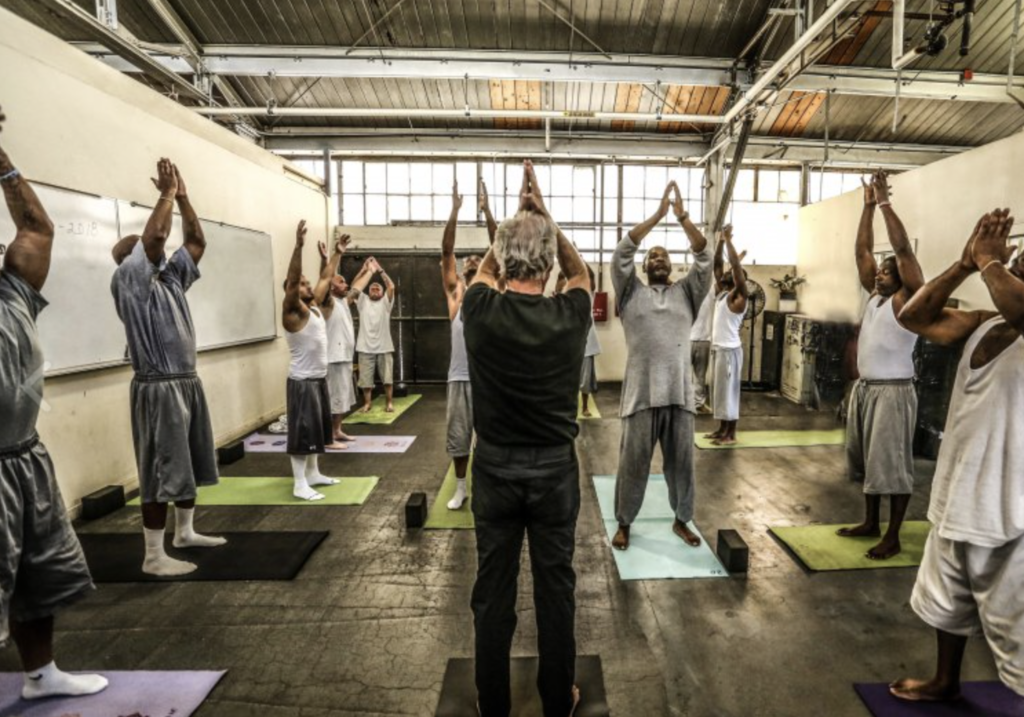
The Prison Yoga Projects is one of the best yoga charities brings trauma-informed yoga to incarcerated people in the United States and across the world.
Practicing yoga and mindfulness techniques behind bars reduces recidivism, increases the effects of therapy, decreases anger and depression, and improves self-awareness.
PYP also offers a special program started in 2010 in which they offer the book Yoga: a Path for Healing and Recovery to incarcerated people for free. Maybe inmates write to PYP requesting the book. Since 2010 they have given away more than 33,000 copies.
The Prison Yoga Project is a praised organization bringing mindfulness and empowered movement to another group that sorely needs it; incarcerated individuals.
This non-profit yoga organization focuses on helping yoga teachers give back to their communities. Their core mission is to provide supplies like mats to yoga teachers who would like to set up a service-based yoga project in their area.
By using this model, they are able to help spread yoga to vulnerable peoples easily and quickly.
They also offer yoga teacher training scholarships to minority groups. Smaller yoga projects who are looking to get kick-started can also apply to the Give Back Yoga Foundation for funding.
Give Back Yoga Foundation also offers an online university where teachers can go to learn more about yoga, science, and non-profit work. There’s a large library of videos and lectures from current yoga industry leaders.
This is definitely one of the best yoga charities aimed at specifically empowering yoga teachers.
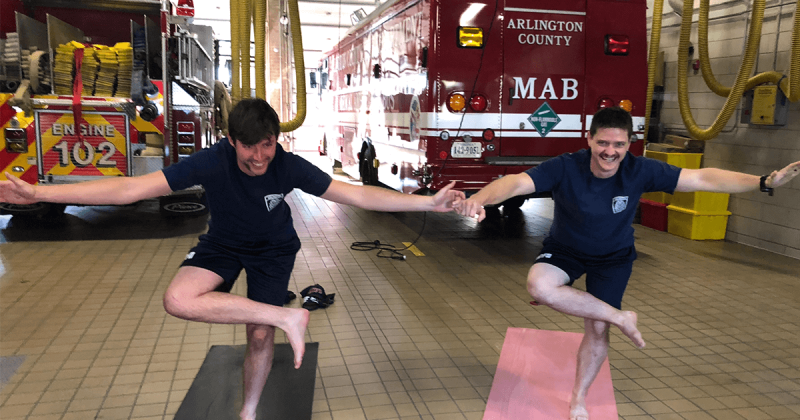
Give Back Yoga Foundation helps yoga teachers set up service-based yoga projects in their communities. This is a class specifically for first responders.
Sheltered Yoga
Sheltered Yoga offers trauma-informed yoga classes to boost mental health and self-esteem. They work in communities across New Jersey, New York, Pennsylvania, and Delaware.
Sheltered Yoga offers classes in group homes, transitional housing, shelters, special needs schools, rehab centers, and more. Their classes focus on building self-worth and confidence in these poverty-stricken areas.
For anyone interested in offering trauma-informed yoga classes in their community, you can join one of their training courses.
Their curriculum is unique because it’s not just about yoga, their aim is to teach self-regulation through mindfulness techniques, life skills, and social-emotional activities.
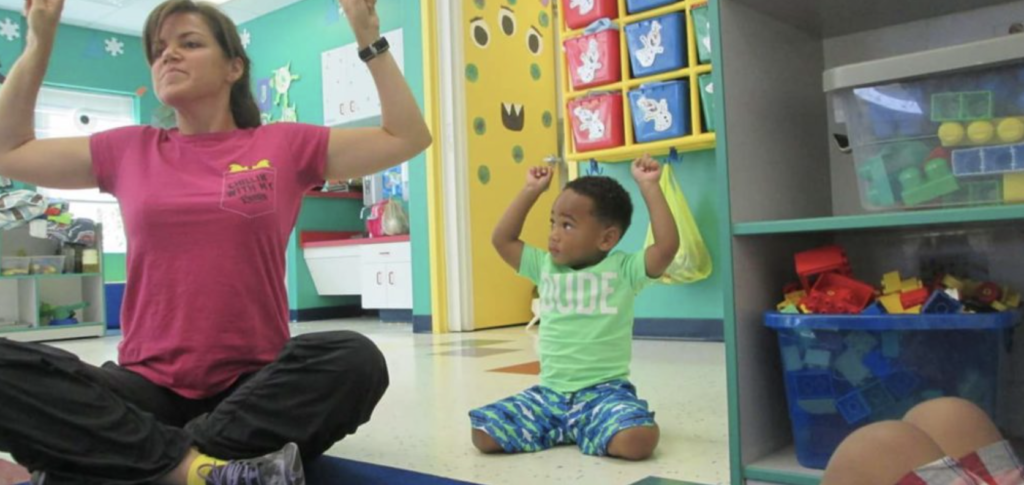
Sheltered Yoga is focused on helping young people build self-esteem and body awareness.
Yoga Gives Back
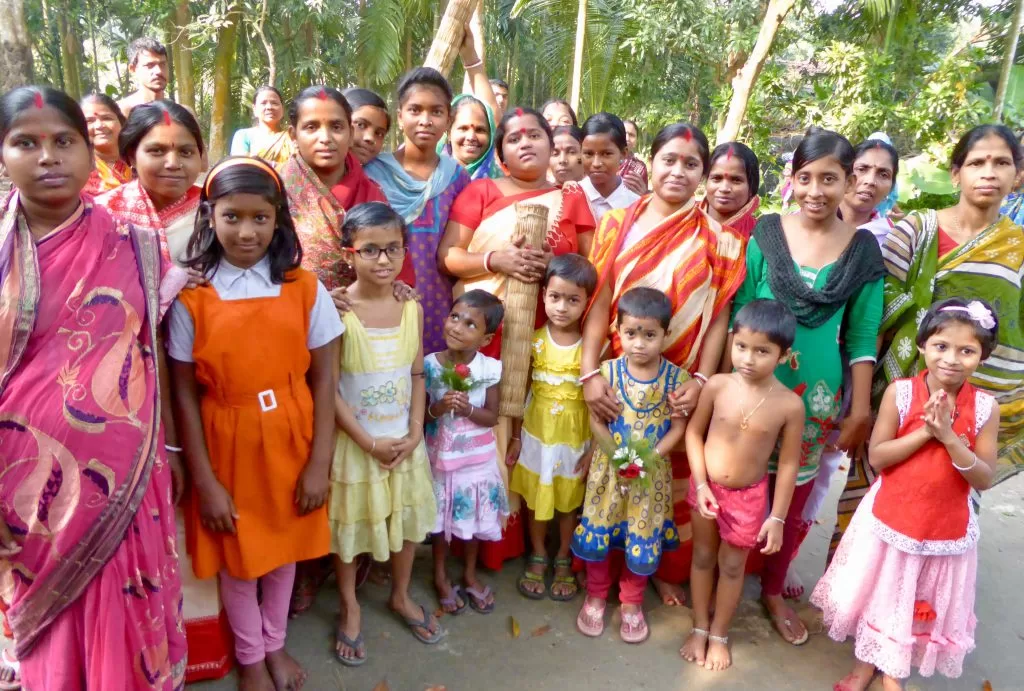
This best yoga charity gives back to the very community that created yoga and sent it all around the world, the people of India!
For the last 15 years, Yoga Gives Back and its 150 ambassadors across the world have created funds to directly help people in India.
Their website says, ” There are many charity organizations within the yoga community, but there is none […] giving back to India, especially to support the serious challenges of poverty and related social issues.”
Some examples of Give Back Yoga’s program include giving 550 micro-loans to Indian mothers, providing 1400 children with care and education, and awarding 400 kids with a 5-year scholarship program.
They have created several other programs which include relief from the covid pandemic, providing women with higher education, and offering access to menstruation materials. Read more about their impactful projects here.
Yoga Give Back to the place where yoga was born, India.
How To Find The Best Yoga Charity Near You
The non-profits listed above are some of the largest yoga charities out there. But there are plenty of smaller, niche charities. Some non-profits only operate in their city or state.
There might be an epic non-profit that’s making an impact right in your own community! And to be fair, these smaller non-profits are the ones that might need funding the most.
To find a local non-profit near you, choose a yoga-related topic that’s dear to your heart and start searching.
Try “homeless yoga non-profit [your city.]” Other topics could include yoga for children, mental health, veterans or PTSD yoga, cancer and dying yoga, prison yoga, mentality disabled yoga, and more.
You can also use large non-profit directories like Guidestar and Charity Navigator to find non-profits in your area plus reviews and more.
How To Vet A Charitable Organization Before Donating
Vetting a non-profit organization before making a donation is a responsible and important step to ensure your contribution is used effectively and goes toward a cause you support. Here are some steps and considerations for vetting a non-profit organization:
Check Their Mission and Goals
Review the organization’s mission statement and goals to ensure they align with your values and interests. Make sure you understand what they aim to achieve.
Verify Their Legal Status
Confirm that the organization is a registered non-profit or charitable organization with the appropriate government agency. In the United States, this typically involves checking their tax-exempt status with the IRS.
Research Their Programs and Impact
Investigate the organization’s programs and initiatives. Look for evidence of their impact, such as success stories, reports, and data on the results of their work. Transparency in reporting is a positive sign.
Financial Transparency
Review the organization’s financial statements and annual reports. Look for information about how they allocate funds, including the percentage of donations that goes directly to programs versus administrative and fundraising costs.
Use Charity Rating Websites
Websites like Charity Navigator, GuideStar, and BBB Wise Giving Alliance provide detailed information and ratings for non-profit organizations. They assess financial health, transparency, and accountability.
Ask for Financial Documentation
Don’t hesitate to ask the organization for financial documents, such as their latest audited financial statements and IRS Form 990. Reputable organizations should be willing to provide these upon request.
Contact the Organization
Reach out to the organization with any questions or concerns you may have. A responsive and transparent organization should be willing to address your inquiries.
Check for Complaints or Controversies
Search for news articles, reviews, or complaints related to the organization. Be cautious if you find a pattern of controversies, legal issues, or ethical concerns.
Assess Their Governance and Leadership
Research the organization’s leadership and board of directors. Look for experienced and qualified individuals who are actively involved in overseeing the organization’s operations.
Donor Privacy and Communication
Review the organization’s donor privacy policy to understand how they handle your personal information. Also, assess their communication practices. Legitimate non-profits typically do not engage in aggressive or deceptive fundraising tactics.
Check for Local Impact (if relevant)
If you’re interested in supporting a local non-profit, consider visiting their offices, attending events, or talking to people in your community who may have experience with the organization.
Evaluate Administrative Costs
While administrative costs are a necessary part of running any organization, a significant portion of your donation should ideally go toward the cause itself. Assess what percentage of donations is allocated to administration and fundraising.
Verify Tax Deductibility
Ensure that your donation to the non-profit is tax-deductible, especially if you plan to claim it as a deduction on your tax return.
Consider Recurring Donations and Impact Over Time
Assess whether you want to make a one-time donation or set up recurring contributions. Recurring donations can provide consistent support for an organization’s long-term goals.
Trust Your Instincts
Ultimately, trust your instincts. If something doesn’t feel right or if the organization lacks transparency, it may be best to consider alternative organizations that align better with your values and priorities.
Vetting a non-profit organization may take some time, but it’s an essential step to ensure your donation is used effectively to make a positive impact on the cause you care about.
Also, make sure to check out their social media pages to make sure they are active. and always feel free to call or email the company to see how your dollars will be put to work, it is your money after all.
Create Your Own “Karma Class” In Your Community
Instead of donating to other charities, you can create positive effects in your very own community with a Karma Class or volunteer class.
A Karma Class is a free or donation-based class for your community, which means that people in need will be able to attend. Any funds collected can be donated to a charity of choice.
Make sure to let your participants know what cause they will be helping. And provide mats if you can.
You can also reach out to your local senior center, homeless shelter, prison, juvenile center, hospital, or school to offer a free weekly or monthly class.
Another way to help is to donate a yoga mat to any of the above non-profits. Here is another company that collects used mats and sends them to non-profits in need: Bolder Mat Company.
You have the power to help people by offering your yoga and meditation skills, or by donating to a quality charity. It’s been scientifically proven that giving makes us happier.
There are plenty of options, share your story about charitable giving below.
Chances are you might have a yoga teacher in your life, and the truth is, they are really special people. So when a birthday, achievement, or Christmas comes around you may be wondering what to gift such a dynamic, nuanced person.
Well, don’t worry, as a yoga teacher myself, I’ve created an in-depth list of amazing gifts for yoga teachers and yogis that they will truly enjoy and use.
Yogis and yoga teachers are just like normal people and can have a large range of interests, but overall I generally believe yoga teachers have an interest in spirituality, mindfulness, wellness, fitness, and a desire to make the world a better place.
Check out this yoga teacher gift guide full of super unique ideas to make sure you get something they really enjoy 😊.
Best Yoga Teacher Gifts With Budget & Splurge Options
Any of these gifts below would make great yogi gifts for Christmas, gifts to give a yoga teacher after a yoga teacher training, or a thank you gift for yoga teacher.
For each item, you’ll find budget options as well as a splurge-worthy item, to make sure all your bases are covered. Check out this list to find the best gift for your yoga teacher!
Meditation Cushion
Mediation cushions can be a yogi’s prized possession. It’s a specifically designed cushion that is used only for meditation.
Make sure to aim for all-natural materials (vs. inorganic polyesters) as this is claimed to heighten the meditation.
This has got to be one of the best gifts for your yoga teacher on this yoga teach gift guide. These massage guns are super effective at relieving soreness and tension all over the body.
I personally have the budget option and it’s super powerful and lasts a long time on one charge.
Again all yogis have a mat but not everyone has a good quality and lightweight travel mat. These travel mats are super easy to tote to and from class and can be used also as a cover on studio mats, as way protection layer if you will.
I personally have the Manduka travel mat below and it is a must-have for any trip as it’s so small and lightweight yet incredibly grippy.
Acupressure mats came on the scene a few years ago and have become quite popular to help people relax and sleep better.
I have tried an acupressure mat and I must say I felt incredibly relaxed after 10 minutes and quickly went to sleep after. The nails on the mat stimulate serotonin production thus offering maximum relaxation and feel-good vibes.
These mats are a great gift for a yogi or anyone who needs to relax.
A yoga wheel is a great tool especially for stretching the back and deepening backends. Any yogi would appreciate adding one of these to their toolbox.
Still looking for more ideas? Here are even more best gifts for your yoga teacher. Remember, yogis are thoughtful, active people so anything in the wellness sector should be a hit.
Non-Materialistic & Unique Gifts For Yoga Teachers
Anyone these days can really appreciate a non-materialistic gift. The trend is moving away from consumerism and focusing more on experiences and feelings rather than material objects. Which is amazing!
Here are a few ideas for special experience-based gifts that will probably be more meaningful and memorable than any material gift you can give.
Online Streaming Yoga Membership
A membership to an online streaming platform is a great gift for a yogi, it will help them maintain their home practice and inspire their yoga classes.
Curious about Alo Moves? Check out this Alo Moves Review plus their competition here.
Vitamin Subscription
Since your dear yogi friend is really into self-care, they will love a vitamin subscription service. There are many companies on the market today as this is a fast-growing sector.
Get your yoga teacher friend a massage gift certificate from a local massage studio and they will love you forever.
Massage
I mean who doesn’t love a massage? Chances are your yoga teacher friend is sore from teaching and running from class to class. And really, just life in general.
Get them a massage gift certificate from a local massage studio and they will love you forever.
Donation To Charity In Their Name
Yogis are on a mission to make the world a better place, that’s what yoga and meditation have the power to do.
Seek out a local charity or research a non-profit involved in something your friend is passionate about.
Try to make the donation in your friend’s name and ask if they offer certificates or at least make sure to get a receipt. This gift will warm their heart as well as help a cause.
Sound healing sessions can have powerful healing effects.
Sound Healing Session
Sound healing is becoming more and more popular thanks to its powerful healing effects. Run a local search to find a sound healer near you and book a session for your yogi friend.
Membership to Spotify
Chances are your yoga teacher friend is spending money either on Spotify or some other streaming service to help add a musical element to their yoga classes.
This gift isn’t quite non-materialistic, but hey it makes gift shopping easy for you and everyone loves a good gift certificate because they can get something they really want!
Alo Moves is a premier online platform for streaming yoga classes and much more. The platform is created by apparel company Alo and is focused on bringing world-class yoga and fitness influencers directly into your home via on-demand workouts and classes.
Alo Moves is different from other online streaming yoga platforms because it offers a large array of classes, including HIIT, meditation, and even beauty routines.
But you may be wondering is Alo Moves worth it? Check out this in-depth Alo Moves yoga review below and my personal experience with the platform.
Alo Moves offers a 30-day free trial which you can cancel anytime. After that there are two subscriptions options:
$20 Month
Or $199 Year – $16.58 per month
Insider Tip– Alo Moves offers a sale on their yearly subscription a few times a year, usually around the beginning of the year. I’ve gotten my yearly membership at a discounted rate for the last 3 years during this sale.
Some of the best-known yogis and fitness influencers
A large variety of classes
Offers “Series” which is a themed group of classes from one instructor
Unique class offerings
Live classes
Regularly run contests and giveaways which inspire motivation
Classes added weekly
The dashboard suggests personalized videos
Capability to stream across a variety of devices
Ability to download classes for later use
Alo Moves Pros & Cons
Like any other streaming service, you need to find one that has all the options you are looking for. Overall, Alo Moves is a great product and I am a very happy customer.
It’s really effective at getting you in shape, keeping you and shape, and teaching you skills or new topics within the health and wellness sphere.
Yet, there are a few things the company can improve on.
Pros
Great usability across devices
Some of the most recognizable instructors in the yoga game
Amazing backdrops
Professional video and sound
Option to play music during classes
Great for beginners, intermediate, and super advanced practitioners
Unique offerings like binaural beats, meditation, recipes, beauty routines, etc.
For some classes you need equipment (although there are plenty of equipment-free classes)
Some instructors seem to over-promote “Alo” yoga gear
Sometimes influencers can be annoying 🤷♀️
Lots of the instructors are young, it would be nice to have some older, really skilled yogis
Alo Moves Highlights
Here is a basic overview of what you can expect from an Alo Moves membership.
How Many Classes Are On Alo Moves?
You’ll find a never-ending list of classes at Alo Moves.
Alo Moves currently has 3240 classes available to stream with new classes added every week. You will find a large array of classes to choose from.
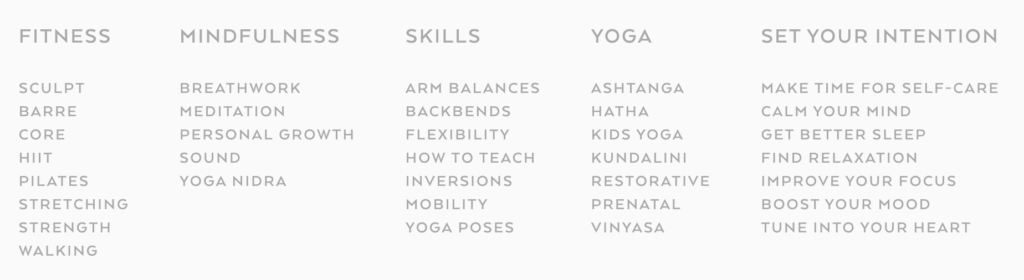
Check out this screenshot below to see the current class categories offered at Alo Moves.
Alo Moves Dashboard
Whether you log on from the app or a desktop browser, you will be directed to the Alo Moves interactive dashboard.
There you will find class suggestions catered to you, and a “jump back in” feature where you can return to a series you have already started.
You will also find new releases and promoted challenges and giveaways on the dashboard.
Searching and filtering classes is easy. You can filter by type of class, length, difficulty, intensity, and instructor.
One thing that makes being a member of Alo Moves so exciting is their regular contests and giveaways.
Alo Moves Contests, Challenges, and Give Aways
One thing that makes being a member of Alo Moves so exciting is their regular contests and giveaways.
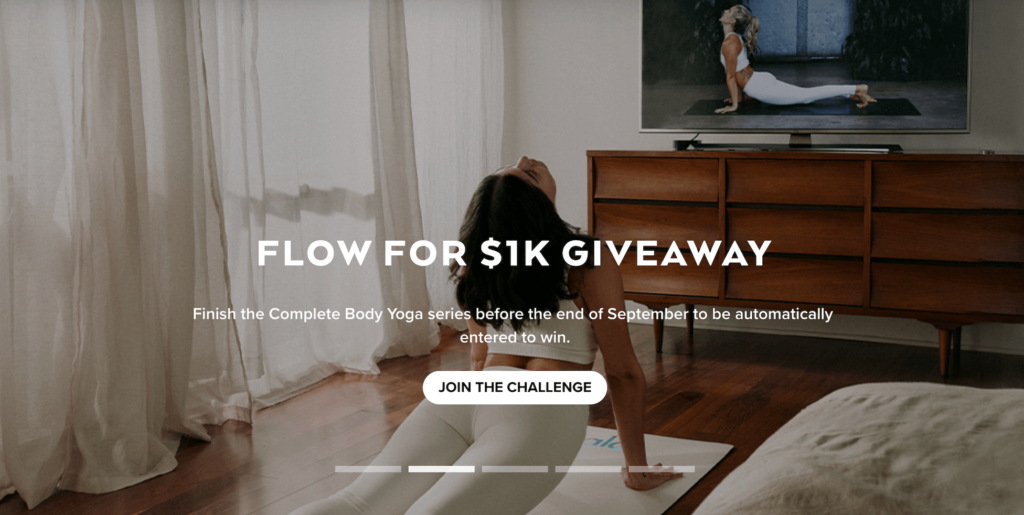
Examples include finishing an entire series (usually 5 – 10 classes) in one month to be automatically entered into a contest to win $1000 and prizes.
They also offer contests for periodically participating in surveys. It’s a good idea to follow them on Instagram as well to stay in the loop on all new and upcoming contests.
What Devices Can You Watch Alo Moves?
The developers at Alo Moves have worked hard to make Alo Moves accessible virtually everywhere. The mobile app is very user-friendly and available on iOS and Android.
On the mobile app, you can download any class to view at a later time.
Below is info taken directly from the Alo Moves website on how you can stream their videos.
Desktop or laptop computer by heading to our website
iPhone and Android phone via our free app
iPad and Android tablet via our free app
Apple TV (4th generation or newer) via our free app. Please note that our Apple TV app is undergoing an update and is temporarily unavailable on the App Store. Stay tuned for the new and improved version!
Additionally, you can watch your workouts on your TV by:
Linking your iPhone or Mac computer using AirPlay
Casting your computer-run Chrome browser using Chromecast
Using an HDMI cord to connect a computer or laptop to your TV
Alo Moves Community
At the time of writing, the community on Alo Moves isn’t much to speak of. You can currently log a class with a comment and other people on the platform can like or comment on your comment.
This aspect of the platform is something that Alo Moves seems like they are interested in expanding.
They do have a strong community and following on Instgram.
Alo Moves Blog
The Alo Moves blog is a great way to get a sneak peek into what Alo Moves offers. The written content is also a great companion to the videos as you can find more in-depth or additional information in the blog posts.
My personal favorite yoga teachers on Alo Moves are Ashley Galvin, Caley Alyssa, and Talia Sutra.
Best Alo Moves Teachers
One of my favorite things that sets Alo Moves apart is their superb team of instructors. There’s such a large variety of instructors and styles which makes finding favorite yoga or fitness influencers easy and fun.
I love finding a new teacher that I vibe with and then diving into one of their series. My personal favorite yoga teachers on Alo Moves are Ashley Galvin, Caley Alyssa, and Talia Sutra.
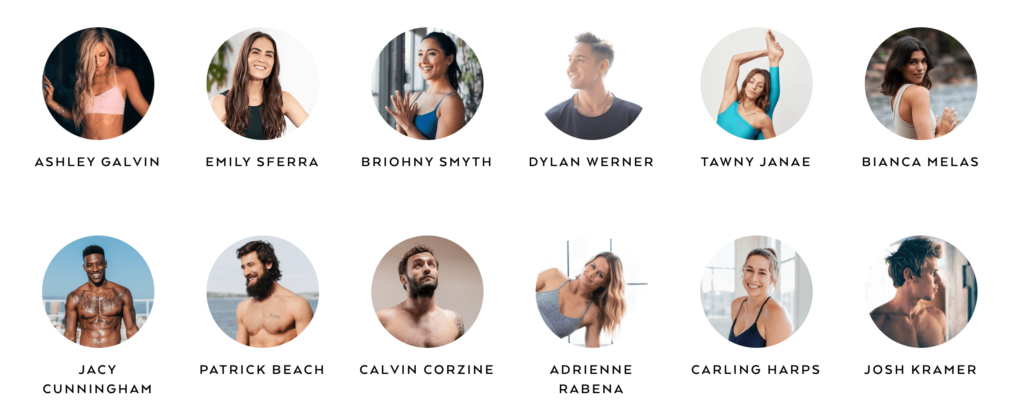
At the time of writing, here are the top 10 most popular Alo Moves instructors. I’ve linked their Instagram so feel free to check them out.
Some series are even set up like a “retreat,” and set in beautiful settings like Costa Rica or Greece.
Best Alo Moves Series
Series are my favorite, similar to a music album, instead of just one class enjoy a themed series from your favorite instructor.
Some series are even set up like a “retreat,” and set in beautiful settings like Costa Rica or Greece. I find the series helps me stay motivated because I want to finish all the classes.
These are the top 10 most popular series on Alo Moves.
Alo Moves is a diverse platform with the overall goal of getting your body and mind right. You can get completely shredded and become skilled at yoga by following along with their series.
The service is moderately priced but you may be able to score a discount a few times a year, especially if you’re a new user.
With classes added weekly, the platform never gets stale, I find myself discovering new classes and teachers that I really enjoy all the time.
I personally live in a remote area and without access to a yoga studio, Alo Moves really is the next best thing, perhaps even better in some regards because of the on-demand nature and variety of offerings.
I also love Alo Moves because as a yoga teacher, I am constantly finding inspiration for my own classes as well as keeping my own practice fresh and exciting.
Free Alo Moves Videos
On Alo Move’s YouTube channel they offer several free lessons. This is a great way to check out their style and see if you would like to join the membership.
Are you an Alo Moves subscriber? Let us know what you think in the comments below.